In a world increasingly conscious of health and environmental impact, choosing kitchen appliances that align with your values is more important than ever. When it comes to enjoying fresh, vibrant citrus juice, the material of your juicer plays a crucial role. For many, plastic juicers raise concerns about chemical leaching, durability, and sustainability. This comprehensive guide will explore why stainless steel, plastic-free citrus juicers are the superior choice, helping you navigate the options to find the perfect appliance for your home.
Understanding Popular Stainless Steel Citrus Juicer Types
Citrus juicers come in various designs, each offering a distinct juicing experience. Understanding these types, especially their plastic-free stainless steel variations, is key to making an informed decision.
Manual Citrus Juicers
Manual juicers offer a straightforward, often portable, and highly durable solution for extracting juice. They typically require physical effort but grant precise control over the juicing process.
- Handheld Squeezers: These simple, often compact devices are perfect for quickly juicing small citrus fruits like lemons and limes. Look for designs made entirely of heavy-duty stainless steel to ensure longevity and prevent rust. They are usually very easy to clean and store.
- Manual Press (Lever-Style) Juicers: Featuring a lever mechanism, these juicers amplify your force, making it easier to extract juice from larger fruits like oranges and grapefruits with minimal effort. Stainless steel lever presses are highly robust, providing excellent juice yield and extreme durability, often lasting for decades. Their design minimizes contact between the juice and the bitter rind, leading to a sweeter, purer taste.
- Manual Reamers: Traditional reamers, often a simple cone design, require you to twist a citrus half against the cone. While some older models were glass, modern plastic-free options are available in stainless steel. They are generally compact and easy to clean, but require more direct manual effort compared to lever presses.
Electric Citrus Juicers
For those who prioritize speed and convenience, electric citrus juicers are an excellent choice. They perform the heavy lifting, effortlessly extracting juice with the press of a fruit.
- Motorized Reamers: These juicers feature a motorized reaming cone that rotates when pressure is applied. They come in various sizes, often with different cones for small and large fruits. When seeking a plastic-free electric model, ensure that all components coming into contact with the juice—such as the reamer cone, filter, and collection container—are made of food-grade stainless steel.
- Press-Arm Electric Juicers: Combining the power of an electric motor with a press-arm lever, these models offer maximum efficiency and ease of use. The press arm holds the fruit in place while the motorized reamer extracts the juice, making it ideal for high-volume juicing. Like other electric options, verify that all juice-contacting parts are robust stainless steel.
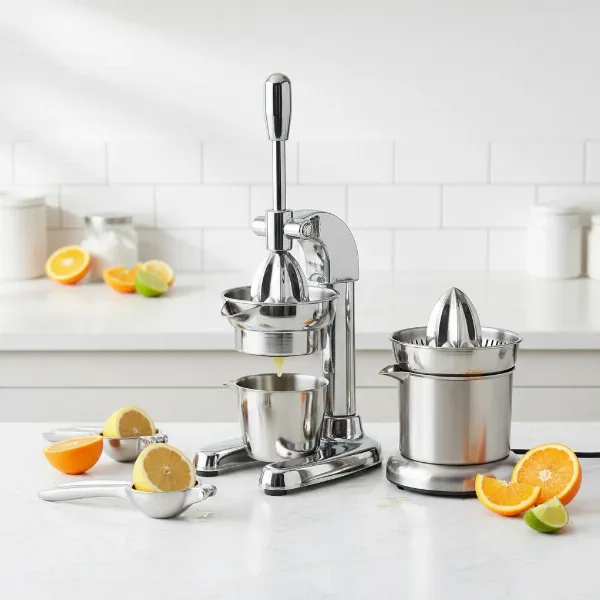 A diverse collection of stainless steel citrus juicers, showcasing manual presses, handheld reamers, and electric models for various juicing needs.
Why Choose Stainless Steel (Plastic-Free) Juicers?
Opting for a stainless steel, plastic-free citrus juicer comes with a myriad of benefits, addressing concerns around health, durability, and environmental responsibility.
Enhanced Health and Safety
One of the primary reasons to choose stainless steel is to eliminate the risks associated with plastic. Many plastics, even “BPA-free” ones, can leach chemicals into your food, especially when exposed to acidic liquids like citrus juice or high temperatures. Stainless steel is a non-reactive, food-grade material that ensures your juice remains pure and free from unwanted contaminants. It doesn’t absorb flavors or odors, guaranteeing the fresh, unadulterated taste of your citrus.
Superior Durability and Longevity
Stainless steel is renowned for its strength and resistance to wear and tear. Unlike plastic, which can degrade, crack, stain, or become brittle over time with frequent use and exposure to acidic fruits, stainless steel maintains its integrity. A high-quality stainless steel juicer is a long-term investment, built to withstand daily use for many years, often outliving several plastic counterparts. It resists rust and corrosion, even in humid kitchen environments.
Effortless Cleaning and Maintenance
The non-porous surface of stainless steel makes it incredibly hygienic and easy to clean. It prevents bacterial buildup and doesn’t stain, even with brightly colored juices. Most stainless steel components are dishwasher safe, simplifying cleanup and allowing you to maintain impeccable hygiene with minimal effort. Simply rinse immediately after use to prevent pulp from drying and sticking.
Environmental Responsibility
Choosing plastic-free appliances contributes to a reduction in plastic waste, which is a significant environmental concern. Stainless steel is a sustainable material that is 100% recyclable. By investing in a durable, long-lasting stainless steel juicer, you reduce your consumption of disposable plastic items and lessen your ecological footprint.
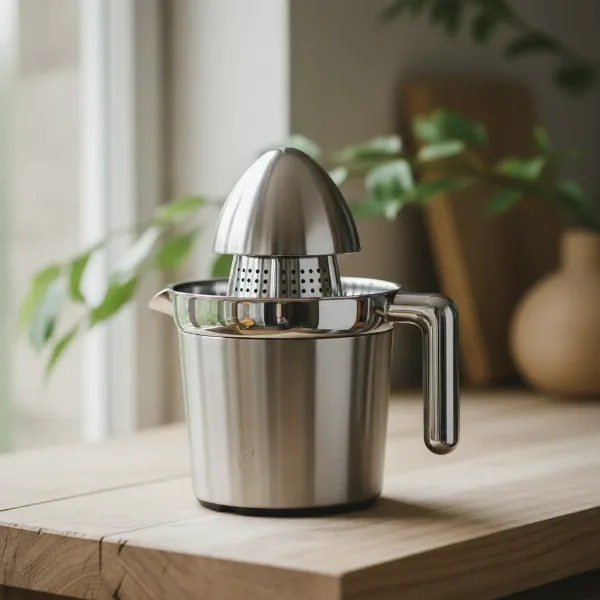 An eco-friendly, durable stainless steel citrus juicer, symbolizing sustainability and long-term kitchen investment.
Aesthetic Appeal and Value
Beyond functionality, stainless steel offers a sleek, modern, and professional aesthetic that complements any kitchen decor. While the initial investment might be higher than a plastic model, the durability, health benefits, and longevity of a stainless steel juicer provide superior long-term value.
Comprehensive Buying Guide: Choosing Your Ideal Stainless Steel Citrus Juicer
Selecting the perfect stainless steel citrus juicer involves considering your specific needs and a few key factors to ensure you get the best plastic-free model.
1. Determine Your Usage Needs
- Frequency: How often will you be juicing? Daily fresh juice for breakfast warrants a robust, efficient model, while occasional cocktail making might suit a simpler manual press.
- Quantity: Are you juicing for one glass or a large pitcher for a family or gathering? High-volume needs often point towards electric models or heavy-duty lever presses.
- Fruit Types: Primarily lemons and limes, or do you also want to juice larger oranges and grapefruits? Ensure the juicer’s cones and press mechanisms accommodate various fruit sizes.
2. Key Factors to Consider
- Material Quality: This is paramount for a plastic-free juicer. Verify that all parts that come into contact with the fruit and juice are made of 100% food-grade stainless steel. Beware of models marketed as “stainless steel” that still use plastic for internal components, reaming cones, or collection containers.
- Power and Efficiency (for Electric Models): Look for sufficient wattage to handle firm fruits without straining. Features like dual rotation or auto-reversing cones can enhance extraction efficiency, ensuring you get every last drop.
- Juice Yield: A good juicer should extract the maximum amount of juice. Electric models with powerful motors and well-designed reamers generally offer high yields, while manual lever presses are also excellent for efficient extraction.
- Ease of Cleaning: Opt for models with minimal, easily detachable parts that are dishwasher safe. Smooth, non-porous stainless steel surfaces are easier to wipe clean.
- Stability and Safety: For electric juicers, anti-slip feet are crucial to prevent movement during operation. Manual lever presses should have a sturdy base and a comfortable, secure grip.
- Pulp Control: Some electric models offer adjustable pulp filters, allowing you to customize your juice from pulp-free to extra-pulpy. Manual reamers often have built-in strainers.
- Size and Footprint: Consider your kitchen counter space and storage availability. Compact manual reamers or handheld squeezers take up very little room, while large electric models require more dedicated space.
- Brand Reputation and Price: Reputable brands often indicate higher quality and better customer support. While stainless steel juicers may have a higher upfront cost, consider it an investment in health, durability, and a plastic-free lifestyle.
Comparison of Common Stainless Steel Citrus Juicer Types
| Feature | Manual Handheld Squeezer | Manual Lever Press | Electric Motorized Reamer |
|---|---|---|---|
| Ease of Use | Requires hand strength | Minimal effort with leverage | Effortless, push-and-go |
| Juice Yield | Good for small fruits | Excellent, efficient | Excellent, consistent |
| Speed | Moderate | Moderate to fast | Fast, especially for batches |
| Cleaning | Very easy (1-2 parts) | Easy (few parts, often dishwasher safe) | Easy (removable parts, often dishwasher safe) |
| Durability | High (solid stainless steel) | Very High (heavy-duty construction) | High (if all components are stainless steel) |
| Portability | Very high | Moderate (can be heavy) | Low (requires power outlet) |
| Noise Level | Silent | Silent | Low to moderate |
| Best For | Small batches, bars, single servings | Regular home use, larger fruits | Frequent, high-volume juicing |
| Typical Cost | Low | Medium to High | Medium to High |
Top Features to Look For in Plastic-Free Stainless Steel Citrus Juicers
When exploring models, keep an eye out for these premium features that enhance the juicing experience and ensure a truly plastic-free product:
- Full Stainless Steel Construction: This means the entire housing, reaming cones, strainer, and juice collector are made of food-grade stainless steel. This is the hallmark of a truly plastic-free juicer.
- Durable Gear or Lever Mechanism: For manual presses, a robust, reinforced lever system ensures longevity and efficient juice extraction. For electric models, a powerful motor with durable gearing is essential.
- Ergonomic Design: Comfortable handles on manual squeezers and a well-balanced design for lever presses reduce hand fatigue. Electric models should have user-friendly operation.
- Drip-Stop Spout: This feature on electric juicers prevents messy drips and keeps your countertop clean.
- Suction Feet/Non-Slip Base: For electric models, these ensure stability during operation.
- Easy Disassembly: Components that are simple to take apart make cleaning much more straightforward.
Essential Tips for Using and Maintaining Your Stainless Steel Citrus Juicer
Proper usage and care will significantly extend the life and performance of your stainless steel citrus juicer.
- Prepare Your Fruit:
- Roll your citrus: Gently roll lemons, limes, or oranges on a countertop with slight pressure before cutting to help break down membranes and maximize juice extraction.
- Warm your fruit: Briefly microwaving whole citrus for 10-15 seconds (at 50% power) can yield significantly more juice by softening the fruit’s cells. Avoid overheating, as this can degrade essential oils and vitamins.
- Avoid cold fruit: Cold fruit yields less juice, even with efficient juicers, due to increased cellular turgor pressure.
- Optimal Juicing Technique:
- For manual presses, apply firm, steady pressure rather than excessive force, which can extract bitter oils from the pith.
- For electric reamers, gently press the fruit half onto the spinning cone and allow the motor to do the work.
- Immediate Cleaning is Key: Always rinse your juicer components immediately after use. Dried pulp can bond irreversibly to stainless steel surfaces, making cleanup much harder. Most stainless steel parts are dishwasher safe, or can be easily washed by hand with warm, soapy water.
- Proper Storage: Ensure all parts are completely dry before storing to prevent water spots. Store in a clean, dry place.
“Investing in a high-quality, plastic-free stainless steel citrus juicer is not just about making juice; it’s about making a conscious choice for your health and the environment. The durability and hygiene benefits of stainless steel make it a cornerstone for any health-conscious kitchen.”
Where to Purchase Reliable Stainless Steel Citrus Juicers
When buying a plastic-free stainless steel citrus juicer, it’s crucial to purchase from reputable sources to ensure authenticity and quality.
- Specialty Kitchen Stores: These retailers often stock a curated selection of higher-quality appliances and their staff can provide expert advice.
- Online Marketplaces: Large online retailers offer a vast selection. Always read product descriptions carefully to confirm “100% plastic-free” claims and check customer reviews for mentions of material quality and durability. Look for detailed material lists for all food-contact components.
- Direct from Manufacturers: Some brands specialize in high-end, plastic-free kitchenware and offer their products directly through their websites, often with comprehensive product information.
Always double-check the product specifications to confirm that all juice-contacting components are indeed stainless steel and not merely “BPA-free plastic” or plastic with a stainless steel exterior.
Conclusion
Choosing the best stainless steel citrus juicer for your home is an investment in fresh, healthy living, superior durability, and environmental responsibility. By understanding the types available, recognizing the profound benefits of plastic-free stainless steel, and considering key buying factors, you can confidently select an appliance that will serve you well for years to come. From the effortless power of an electric model to the timeless reliability of a manual press, a stainless steel citrus juicer ensures every drop of juice is pure, potent, and perfectly aligned with a healthy, sustainable lifestyle. What fresh, vibrant concoctions will you create with your new juicer?
Frequently Asked Questions
What are the main benefits of a stainless steel juicer over a plastic one?
Stainless steel juicers offer enhanced health safety by preventing chemical leaching from plastics, superior durability and longevity due to their robust construction, easier cleaning, and are a more eco-friendly choice. They also maintain the pure taste of your juice without absorbing flavors.
Are all “BPA-free” juicers truly plastic-free?
No. While “BPA-free” indicates the absence of a specific chemical, many juicers can still contain other plastics that may leach chemicals or degrade over time. For a truly plastic-free experience, look for juicers where all food-contact parts are explicitly stated to be 100% food-grade stainless steel or glass.
Is a manual or electric stainless steel citrus juicer better?
The “better” choice depends on your needs. Manual juicers are great for small batches, portability, and ease of cleaning, offering precise control. Electric juicers excel in speed and efficiency for larger quantities, requiring minimal physical effort. Both can be excellent choices when made entirely from stainless steel.
How do I ensure my stainless steel juicer extracts the most juice?
To maximize juice yield, prepare your citrus by rolling it gently on a countertop and slightly warming it in a microwave for a few seconds. For manual presses, use firm, steady pressure rather than excessive force to avoid bitter pith. For electric models, ensure the fruit is properly seated on the reaming cone.
How do I clean and maintain a stainless steel citrus juicer?
Always clean your stainless steel juicer immediately after use to prevent pulp from drying. Most components are dishwasher safe, or can be easily washed by hand with warm, soapy water and a soft cloth. Ensure all parts are thoroughly dried before storage to prevent water spots and maintain hygiene.