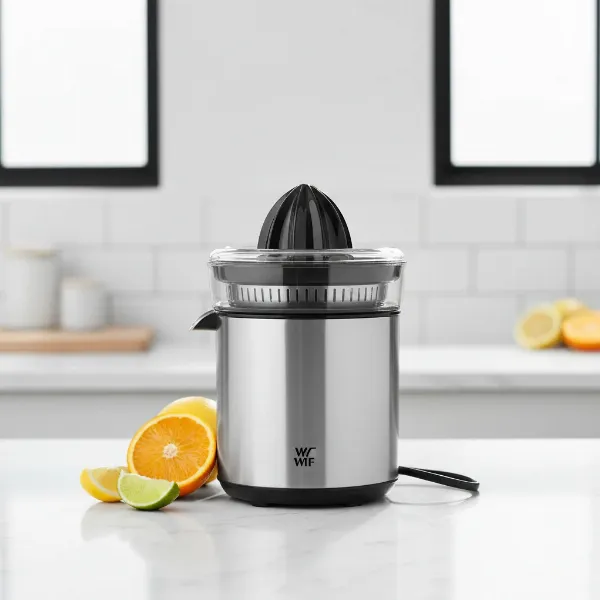
There’s nothing quite like the vibrant taste and refreshing tang of freshly squeezed orange juice. It’s a sunshine-filled glass packed with essential vitamins and natural goodness, a perfect start to any day. However, this delightful beverage comes with a challenge: its fleeting freshness. Unlike its store-bought counterparts, homemade orange juice is free from preservatives, making it susceptible to spoilage if not stored correctly. But don’t let that deter you from enjoying your homemade liquid gold! With the right techniques, you can extend its freshness, maintain its nutritional value, and savor that pure taste for longer.
Understanding Fresh Orange Juice Shelf Life
Why does freshly squeezed orange juice seem to spoil so quickly? The primary culprits are oxidation and microbial growth. Once oranges are juiced, their natural protective barriers are broken, exposing the juice to air, light, and bacteria. This exposure kickstarts a process where nutrients, particularly Vitamin C, begin to degrade, and the flavor can shift from bright and sweet to tart or even bitter. The temperature at which the juice is kept, and the amount of air it’s exposed to, significantly influence how rapidly these changes occur.
Best Practices for Refrigerated Storage
Immediate and proper refrigeration is the cornerstone of preserving freshly squeezed orange juice. To ensure optimal freshness, always place your juice in the refrigerator as soon as possible after squeezing, ideally at a temperature of 40°F (4°C) or lower.
Choosing the Right Storage Containers
The container you choose plays a vital role. For refrigerated storage, airtight containers are paramount. These minimize contact with oxygen, which is a major contributor to oxidation and nutrient loss.
- Glass containers are highly recommended over plastic. Glass is non-reactive, meaning it won’t leach chemicals into your juice or alter its taste. It also provides a superior oxygen barrier, keeping your juice fresher for longer.
- If using plastic, opt for high-quality, BPA-free, food-grade options, though glass remains the preferred choice.
- Opaque or dark-colored containers are beneficial as they protect the juice from light exposure, which can degrade sensitive vitamins like Vitamin C.
- Always fill the container to the very top, leaving as little air space as possible. This further reduces oxygen exposure and helps to maintain the juice’s quality.
Store the sealed container in the coolest part of your refrigerator, typically towards the back, where temperatures are most consistent. Under these conditions, freshly squeezed orange juice generally maintains its best quality for 2 to 3 days.
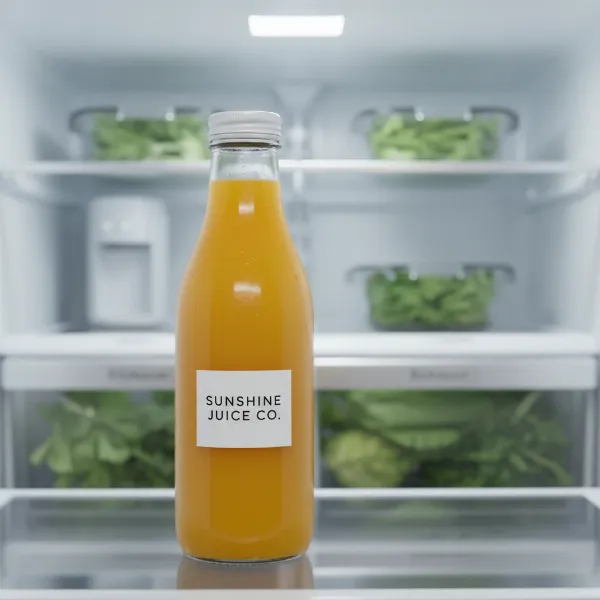 Freshly squeezed orange juice stored in an airtight glass container in a refrigerator.
Freezing Fresh Orange Juice for Longer Preservation
If you have an abundance of fresh oranges or simply want to enjoy homemade juice beyond a few days, freezing is an excellent option for extended preservation.
Benefits and Methods of Freezing
Freezing significantly halts the degradation process, allowing you to store your juice for much longer.
- Preparation: Pour your freshly squeezed juice into freezer-safe, airtight containers. Remember to leave at least ½ inch of headspace at the top of the container, as liquids expand when they freeze. Mason jars (ensure they are freezer-safe, typically straight-sided ones), rigid plastic freezer containers, or even silicone ice cube trays are great choices. Freezing in individual portions using ice cube trays makes it convenient to thaw only what you need.
- Shelf Life: When properly frozen, fresh orange juice can last for 3 to 4 months. While freezing may lead to a slight reduction in certain vitamins, such as Vitamin C, it effectively preserves most of the juice’s nutritional value and flavor compared to letting it spoil in the fridge.
- Thawing: To enjoy frozen orange juice, simply transfer it to the refrigerator to thaw overnight. For quicker thawing, you can place the sealed container in a bowl of cold water. Avoid using hot water or microwaves, as excessive heat can compromise nutrients and flavor.
“For the purest taste and maximum nutrient retention, consume freshly squeezed orange juice within 24 hours. However, with proper airtight storage and refrigeration, you can confidently enjoy it for up to 72 hours.”
It’s worth noting that some varieties of oranges, like navel oranges, can develop a slightly bitter taste after freezing due to certain enzymes. Experiment with your preferred orange types to see how they fare.
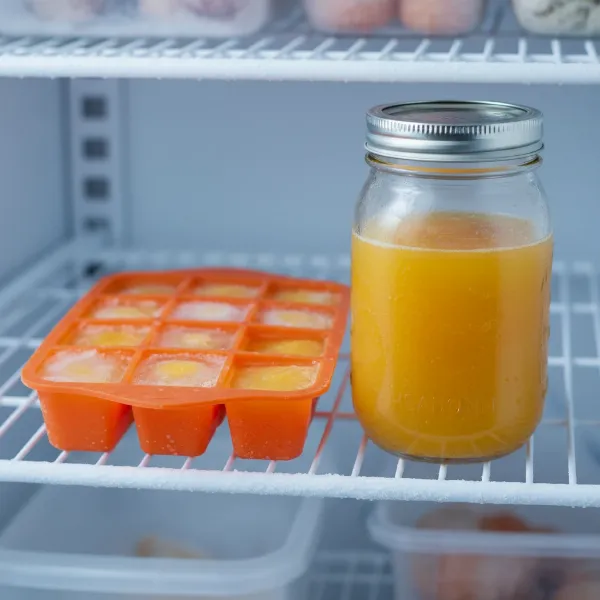 Frozen orange juice in silicone ice cube trays and a freezer-safe jar.
Tips to Maximize Freshness and Nutrient Retention
Beyond proper storage, a few simple practices can help your orange juice stay fresher and more potent from the start.
- Start with the Freshest Oranges: The quality of your juice begins with the quality of your fruit. Use ripe, fresh oranges that are free from blemishes. Keeping your oranges cold in the refrigerator before juicing can also help maintain a lower temperature during the juicing process, which minimizes enzyme activity and potential bacterial growth.
- Squeeze and Store Immediately: The moment juice is exposed to air, the clock starts ticking on oxidation. Juice your oranges and transfer the juice to its airtight storage container as quickly as possible.
- Minimize Air Exposure: As discussed, filling containers to the brim is crucial. If you’re using a large container, consider dividing the juice into smaller, single-serving portions to reduce the number of times you expose the entire batch to air when pouring.
- Consider Cold-Press Juicers: While not always feasible, cold-press juicers (also known as slow juicers) extract juice with minimal heat and aeration compared to centrifugal juicers. This gentle process can result in juice that inherently has a slightly longer shelf life and better nutrient retention.
- Add a Touch of Lemon Juice: A small amount of freshly squeezed lemon juice can act as a natural preservative. The high citric acid content helps to slow down oxidation and can subtly enhance the flavor.
Signs Your Orange Juice Has Gone Bad
Even with the best storage practices, freshly squeezed orange juice has a limited lifespan. It’s essential to recognize the signs of spoilage to ensure safety and avoid an unpleasant experience.
- Appearance: Look for changes in color. Fresh orange juice is typically a vibrant orange. If it appears dull, brownish, or cloudy, it might be spoiling. The most obvious sign is the presence of mold, which can appear as fuzzy white, green, or black spots or floating particles.
- Smell: Give it a sniff. Fresh orange juice has a distinct, sweet, citrusy aroma. If it smells sour, vinegary, fermented (like alcohol), or simply “off,” it’s time to discard it.
- Taste: As a last resort, if the appearance and smell seem fine but you’re still unsure, take a very small sip. If it tastes bitter, overly sour, or fizzy, it’s spoiled. Never drink large quantities of juice that tastes bad.
Consuming spoiled juice can lead to upset stomach, nausea, vomiting, or diarrhea. When in doubt, it’s always safest to throw it out.
Frequently Asked Questions
How long can freshly squeezed orange juice sit out at room temperature?
Freshly squeezed orange juice should not be left at room temperature for more than two hours. Beyond this timeframe, bacteria can rapidly multiply, making the juice unsafe to drink.
Does freezing freshly squeezed orange juice affect its taste?
Freezing can subtly alter the texture and taste of orange juice, sometimes making it slightly less vibrant or causing some pulp to separate upon thawing. However, for many, the convenience of longer storage outweighs this minor change. Some orange varieties, like navel oranges, might become slightly bitter when frozen.
Can I pasteurize freshly squeezed orange juice at home?
While pasteurization (heating juice to a specific temperature to kill bacteria) can extend shelf life, it’s generally not recommended for home kitchens. Achieving the precise temperature for effective pasteurization without overcooking and significantly altering the flavor and nutrient content is challenging for home cooks.
Conclusion
Embracing the goodness of freshly squeezed orange juice is a rewarding experience, and mastering its storage ensures you get the most out of every drop. By understanding the enemies of freshness—air, light, and warmth—and implementing simple strategies like using airtight glass containers, maintaining consistent refrigeration, and leveraging the power of freezing, you can significantly extend the enjoyment of your homemade juice. Always remember to prioritize food safety by recognizing the signs of spoilage. What’s your favorite way to enjoy this liquid sunshine after a long week?