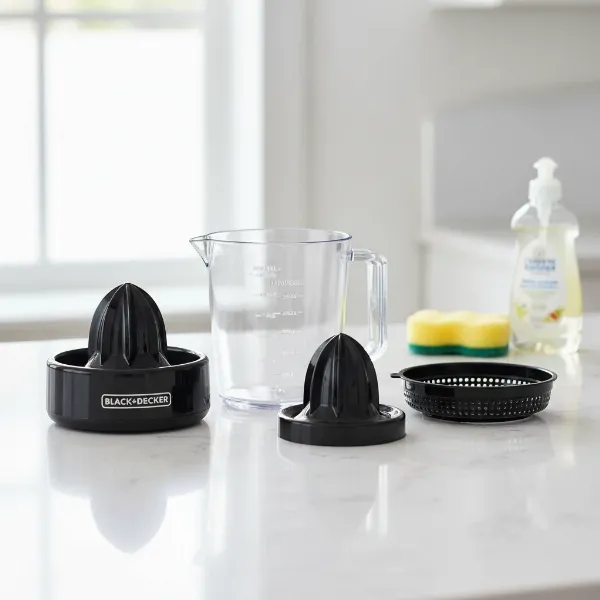
Juicing limes can be a refreshing endeavor, but often it turns into a sticky, splattering mess. Whether you’re preparing a vibrant cocktail, a zesty marinade, or a tangy dessert, getting every last drop of juice without coating your kitchen in citrus can be a challenge. This guide will transform your lime-juicing experience, making it efficient, effortless, and entirely mess-free. You’ll learn the secrets to maximizing juice yield, selecting the right tools, and implementing techniques that keep your countertops pristine, ensuring your culinary adventures remain enjoyable and clean.
Understanding Your Limes: The Foundation of Efficient Juicing
Before you even reach for a juicer, understanding your limes is crucial for success. Not all limes are created equal, and proper preparation can significantly impact your juice yield and overall experience. The goal is to soften the fruit and release its precious liquid without tearing the membranes excessively.
Firstly, always choose ripe, firm limes that feel heavy for their size. These typically contain more juice. Avoid any with soft spots or blemishes. Secondly, temperature matters. Limes stored at room temperature tend to yield more juice than those straight from the refrigerator. If your limes are cold, let them sit out for 15-30 minutes before juicing.
The critical step in preparation is breaking down the internal membranes. Gently rolling a lime firmly on a countertop for 10-15 seconds before cutting will help achieve this. Apply moderate pressure with your palm as you roll it back and forth. This action softens the fruit and makes it easier for the juice to flow, leading to a higher yield with less effort and less mess.
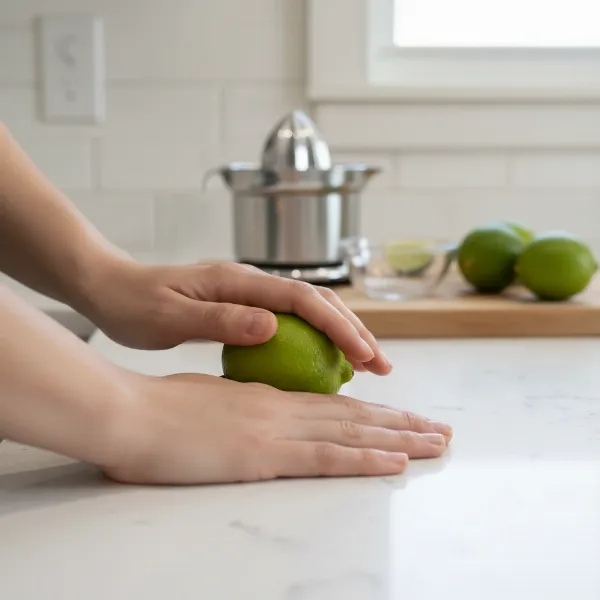 A person rolling a whole lime on a clean kitchen countertop to soften it before juicing.
Essential Tools for Mess-Free Lime Juicing
Choosing the right tool is paramount for efficient and tidy lime juicing. While a simple fork can work in a pinch, dedicated citrus juicers significantly reduce effort and mess. The market offers a variety of options, each with its own advantages for different needs and juicing volumes.
Manual Juicers
Manual juicers are excellent for home use and offer precise control, making them ideal for small to moderate quantities of limes. They generally fall into two categories:
- Handheld Squeezers (Lime Presses): These are perhaps the most popular for their simplicity and effectiveness. A handheld lime press typically features a bowl-shaped reservoir and a hinged handle. You place a halved lime (cut side down) into the bowl, and then press the handles together. The juice collects in the reservoir, often with built-in strainers to catch seeds and pulp. They are incredibly efficient at extracting juice directly into a glass or bowl, minimizing splatter. Look for models made from sturdy, food-grade metal like stainless steel or enameled aluminum for durability and easy cleaning.
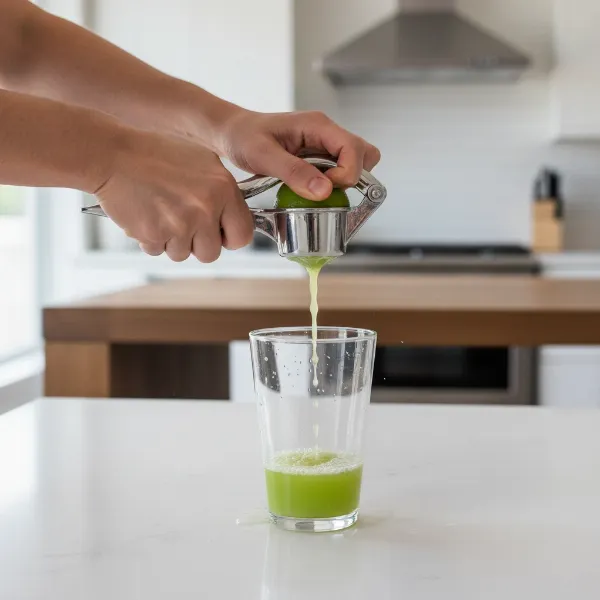 A person using a metal handheld lime press to extract juice from a halved lime into a clear glass.
 - Reamers (Cone-Style Juicers): A reamer is a cone-shaped tool, often with a handle, that you twist into a halved lime. Some reamers come with a base to catch the juice and seeds. While effective, reamers can sometimes cause more splatter if not used carefully, as the juice can spray as you twist. However, they are compact and generally inexpensive. For mess-free operation, use a reamer over a deep bowl or directly into a measuring cup.
Electric Juicers
For those who frequently juice large quantities of limes, an electric citrus juicer can be a game-changer. These appliances automate the reaming process and often come with built-in pulp strainers and juice collection containers.
- Electric Reamers: These typically have a motorized reaming cone that spins when pressure is applied by the halved lime. They are fast, powerful, and extract juice with minimal effort. Many models come with different-sized cones for various citrus fruits. The juice flows directly into a carafe, ensuring a tidy process.
- Centrifugal and Masticating Juicers (with citrus attachments): While primarily designed for a wider range of fruits and vegetables, some high-end juicers offer citrus attachments. These can be very efficient but might be overkill if your primary need is just limes. Their contained design inherently reduces mess.
When selecting a tool, consider how often you juice limes, the volume you need, and your budget. For most home cooks, a robust handheld lime press offers the best balance of efficiency, mess prevention, and value.
Advanced Techniques for Maximizing Juice and Minimizing Mess
Beyond proper tools and preparation, specific techniques can significantly enhance your lime-juicing efficiency and keep your kitchen spotless. These methods focus on controlled extraction and strategic handling of the fruit.
The Rolling Technique for Maximum Yield
As mentioned, rolling the lime on a countertop before cutting helps to break down internal membranes. This simple action makes the lime more pliable and releases more juice with less effort. After rolling, cut the lime in half lengthwise rather than crosswise. This exposes more of the pulp to the juicer, allowing for better juice extraction.
Mastering the Handheld Press
When using a handheld lime press, insert the halved lime cut-side down into the bowl. This ensures that the dome of the press pushes against the rind, inverting the pulp and extracting juice directly through the holes into your container. Apply steady, firm pressure rather than jerky squeezes. Squeeze until you feel the rind become thin and hear the internal membranes tearing. Tilt the press slightly towards your target container to ensure all the juice flows cleanly.
Reamer Best Practices
If you’re using a reamer, hold the lime half firmly over a deep bowl or measuring cup. Insert the reamer and twist with firm, downward pressure, rotating the lime around the reamer. Continue until the pulp is mostly collapsed. The deep container will catch any potential splatter. For stubborn limes, you can try inserting a fork into the lime half a few times before reaming to help break up the pulp.
The Microwave Trick
For limes that are particularly firm or cold, a quick blast in the microwave can make a surprising difference. Microwave a whole lime for 10-20 seconds on high. Be cautious, as it might be hot. This gentle heating helps to soften the fruit and its internal structure, making it easier to extract juice. Combine this with the rolling technique for superior results.
Avoiding Seeds and Pulp
Most handheld squeezers and electric juicers come with built-in strainers for seeds and large pulp pieces. However, if you’re using a reamer or a method that doesn’t filter, a fine-mesh sieve placed over your collecting container is your best friend. Alternatively, you can cup your hand loosely over the lime half as you squeeze it, allowing juice to pass through your fingers while catching larger seeds.
Post-Juicing Cleanup: Quick Tips for a Spotless Kitchen
The final step in a truly efficient and mess-free juicing experience is effortless cleanup. While the previous steps aimed to prevent mess, sometimes a few drops are inevitable. Quick and proper cleaning ensures your tools last longer and your kitchen stays sparkling.
Immediately after juicing, rinse your tools with warm water. Lime juice is acidic and can cause corrosion or staining if left to dry, especially on metal presses. For most manual juicers, a quick rinse is usually sufficient. If pulp or fibers are stuck, a small brush or even an old toothbrush can help dislodge them from crevices or strainer holes.
Most handheld presses and electric juicer components are dishwasher safe, but always check the manufacturer’s instructions. If washing by hand, a little dish soap and a sponge will do the trick. For countertops, a simple wipe down with a damp cloth or a spray of an all-purpose cleaner will easily remove any stray drops of juice. By integrating these quick cleanup habits, you ensure that the enjoyment of fresh lime juice extends to a truly hassle-free kitchen experience.
Conclusion
Mastering the art of juicing limes efficiently and without a mess is a valuable skill for any home cook. By starting with ripe, room-temperature fruit and employing the simple rolling technique, you set the stage for maximum yield. Selecting the right tool, whether it’s a sturdy handheld press for everyday use or an electric juicer for larger volumes, is crucial for controlled and clean extraction. Combining these with smart techniques like cutting limes lengthwise and precise squeezing ensures every drop of juice makes it into your dish, not onto your counters.
A clean juicing process translates to a more enjoyable cooking experience, saving you time and effort in the long run. So, next time a recipe calls for fresh lime juice, approach it with confidence and these proven methods. What culinary creation will you elevate with perfectly juiced limes?
Frequently Asked Questions
How do you get the most juice out of a lime?
To get the most juice, choose a ripe, heavy lime, roll it firmly on a countertop for 10-20 seconds to break down internal membranes, and consider microwaving it for 10-20 seconds if it’s cold or firm. Cut it lengthwise before using a good quality handheld press.
What is the best tool for juicing limes without a mess?
A high-quality handheld lime press (squeezer) is generally considered the best tool for mess-free lime juicing at home. Its design allows for direct juice flow into a container while catching seeds and minimizing splatter.
Should I roll limes before juicing them?
Yes, absolutely. Rolling a lime on a firm surface with gentle pressure before cutting and juicing helps to soften the fruit and break down its internal membranes, allowing for significantly more juice extraction with less effort and less mess.
How do I prevent lime juice from splattering?
To prevent splatter, use a handheld press or an electric juicer with a contained juice collection. When using a reamer, hold the lime half directly over a deep bowl or measuring cup. Applying steady, controlled pressure rather than harsh squeezing also helps.
Can I juice limes that have been in the refrigerator?
While you can, it’s highly recommended to bring refrigerated limes to room temperature before juicing. Cold limes yield less juice. If time is short, microwaving them for 10-20 seconds can help soften them for better juice extraction.