Pomegranates, with their jewel-toned arils and vibrant, tangy juice, are a powerhouse of antioxidants and a delightful addition to any diet. Yet, many shy away from juicing them, intimidated by the perceived complexity or the fear of a messy kitchen. The good news is, you don’t need specialized equipment to enjoy fresh pomegranate juice. Your trusty citrus press, whether manual or electric, is surprisingly effective at extracting this ruby liquid, transforming what seems like a daunting task into a simple, satisfying process.
Unlocking Pomegranate Potential: Why a Citrus Press Works
While primarily designed for oranges, lemons, and limes, a citrus press leverages the same fundamental principle to extract juice from pomegranates: pressure. Pomegranate arils, the individual seeds encased in pulp, release their juice readily when compressed. By cutting the fruit and applying force, the press efficiently separates the juice from the pulp and seeds, making it a viable and convenient tool for your pomegranate juicing needs. This method bypasses the tedious process of deseeding each pomegranate, saving considerable time and effort.
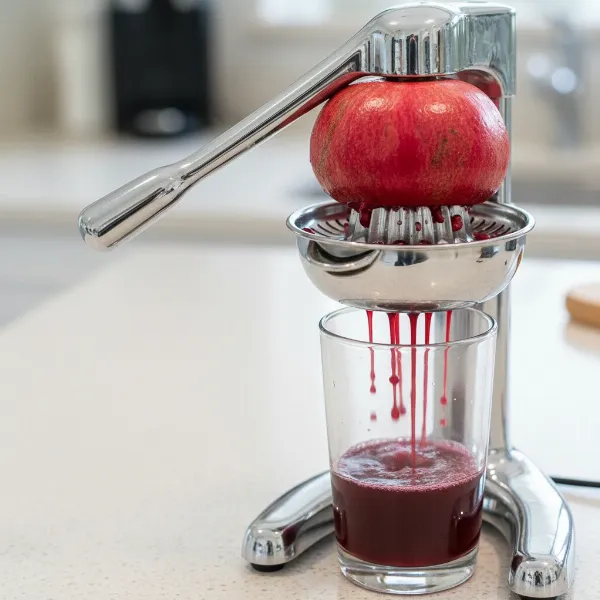 Manual citrus press extracting juice from a halved pomegranate, highlighting the efficient juicing process.
Choosing Your Weapon: Electric vs. Manual Citrus Presses for Pomegranates
Both electric and manual citrus presses can be employed for pomegranates, each offering distinct advantages.
Manual Citrus Presses:
These presses, often robust and made of cast iron or stainless steel, rely on your physical strength to squeeze the fruit.
- Pros: Provide precise control over pressure, which can help in avoiding the bitterness from over-pressing the white pith. They are quiet, durable, and don’t require electricity, making them suitable for any kitchen setup or even outdoor use. Their simple design also means fewer parts to clean.
- Cons: Requires more effort, which might be a consideration if juicing a large quantity. The pressing area might be smaller than some pomegranates, necessitating cutting into quarters.
Electric Citrus Juicers:
Featuring a motorized reamer that rotates, these machines do most of the work for you.
- Pros: Effortless operation, making them ideal for those with limited hand strength or when processing a moderate amount of fruit. Generally faster than manual presses.
- Cons: Can be messier due to splatter, and the juice might have a slightly more bitter taste if too much pith is aggressively reamed. Requires an electrical outlet.
For smaller batches and a desire for optimal taste control, a manual press is often favored, while an electric model offers convenience for larger quantities, provided you manage the potential for mess and bitterness.
Step-by-Step Guide: Juicing Pomegranates with Ease
Juicing pomegranates with a citrus press is straightforward once you know the technique.
Preparation: Setting the Stage for Success
Table is empty.- Select Ripe Pomegranates: Choose pomegranates that are heavy for their size, with taut, unblemished skin. A slight flatness on the sides often indicates ripeness.
- Wash Thoroughly: Rinse the pomegranates under cold water to remove any dirt or residues.
- Prepare Your Workspace: Pomegranate juice stains intensely. Lay down old towels, newspaper, or a cutting board to protect your countertops. Consider wearing an apron to protect your clothing.
- Cut the Pomegranate: Using a sharp knife, carefully cut each pomegranate in half across its equator, just like you would an orange. For very large pomegranates or some manual presses, cutting into quarters might provide a better fit and more efficient extraction.
The Juicing Process: Pressing for Perfection
- Position the Pomegranate: Place one half of the pomegranate onto the reamer of your electric juicer or into the bowl of your manual press, cut side down.
- Apply Pressure:
- Electric Juicer: Turn on the juicer and apply gentle to moderate pressure. Allow the reamer to extract the juice. Avoid excessive force, as this can lead to more pith being pulverized, potentially increasing bitterness.
- Manual Press: Slowly and firmly lower the handle of the press. You’ll feel the resistance as the juice begins to flow. Maintain steady pressure until most of the juice has been extracted.
- Repeat: Remove the pressed pomegranate half, discard the pulp and skin (or reserve for further extraction if desired), and repeat the process with the remaining halves.
 A glass of vibrant, freshly squeezed pomegranate juice, with whole and halved pomegranates nearby.
Maximizing Yield: Getting Every Precious Drop
After the initial pressing, you might notice some arils still holding onto juice.
- Strain for Residual Juice: For maximum yield, you can scoop the remaining arils and pulp into a fine-mesh sieve placed over a bowl. Use the back of a spoon to press down on them, extracting any last drops of juice. This also helps filter out any larger bits of pulp or stray seeds.
- Double Press (Manual): With a manual press, some users lightly re-press the fruit from a slightly different angle to ensure thorough extraction.
Mastering the Art: Tips for a Better Pomegranate Juicing Experience
Achieving delicious pomegranate juice with minimal fuss involves a few key considerations.
- Minimizing Mess and Stains: As previously mentioned, pomegranate juice is a powerful dye. Always work on a protected surface, and wipe up any spills immediately with a damp cloth. Wearing dark clothing or an apron is a smart precaution.
- Avoiding Bitterness: The white pith, or membrane, of a pomegranate can impart a bitter taste if extensively crushed or reamed. Focus your pressing efforts on the juicy arils and avoid grinding into the white parts excessively, especially with electric juicers. Gentler, controlled pressure is key.
- Quick Cleanup: Rinse your citrus press components immediately after use. Pomegranate juice can dry and become sticky, making cleanup harder. Most parts of citrus presses are dishwasher safe, or can be easily hand-washed with warm, soapy water.
“Pomegranate juice is not just delicious; it’s packed with polyphenols, offering more antioxidants than many other fruit juices. Making it fresh at home is a fantastic way to boost your daily nutrient intake.” – Health & Wellness Expert, Nutrition Today
Beyond the Press: What to Do with Your Pomegranate Juice
Once you’ve successfully juiced your pomegranates, the possibilities are endless. Enjoy it straight up for a refreshing and healthy drink. Incorporate it into smoothies, cocktails, or mocktails. Pomegranate juice also makes a fantastic base for salad dressings, marinades, or reductions like homemade pomegranate molasses, adding a unique sweet-tart flavor to both sweet and savory dishes. Store fresh pomegranate juice in an airtight container in the refrigerator for up to 5 days, or freeze it in ice cube trays for longer preservation.
Conclusion
Don’t let the vibrant allure of pomegranates be overshadowed by the myth of difficult juicing. Your everyday citrus press is a highly capable tool for extracting delicious, antioxidant-rich pomegranate juice with surprising ease. By following a few simple steps—preparing your fruit, understanding the nuances of your press, and taking simple precautions against staining and bitterness—you can enjoy fresh pomegranate juice whenever the craving strikes. So, grab a pomegranate, dust off your citrus press, and embark on a journey of flavorful, homemade goodness. What delightful concoction will you create with your freshly pressed pomegranate juice?
Frequently Asked Questions
Can all citrus presses handle pomegranates?
Most standard manual and electric citrus presses can handle pomegranates. However, larger pomegranates may need to be cut into quarters to fit properly, especially in smaller presses.
How much juice can I expect from one pomegranate?
The yield varies depending on the pomegranate’s size and juiciness, but typically, one medium-sized pomegranate will produce about 1/4 to 1/3 cup of fresh juice.
Does juicing pomegranates with a citrus press make the juice bitter?
It can, if too much of the white pith (membrane) is excessively pressed or reamed. The key is to apply enough pressure to extract the aril juice without grinding into the bitter pith.
What is the best way to clean my citrus press after juicing pomegranates?
Clean your citrus press immediately after use by rinsing the components with warm, soapy water. Many parts are dishwasher safe. Immediate cleaning prevents the sticky juice from drying and staining.
Do I need to deseed the pomegranate before using a citrus press?
No, one of the main advantages of using a citrus press for pomegranates is that you do not need to deseed them. Simply cut the fruit in half and press.