There’s a unique satisfaction that comes from freshly squeezed citrus juice – the vibrant aroma, the tangy taste, and the feeling of healthy invigoration. Manual press juicers are fantastic tools for achieving this, offering simplicity and efficiency without electricity. However, a common frustration many users encounter is a broken handle. It’s a disheartening moment when your reliable kitchen companion gives way, often due to preventable mistakes rather than inherent flaws in the design. Understanding these pitfalls and adopting proper techniques can significantly extend the life of your manual press juicer, ensuring countless glasses of fresh juice for years to come. This guide will walk you through the most common errors that lead to handle breakage and provide practical advice on how to keep your manual press operating smoothly.
The Mechanics of Manual Press Juicers: Understanding Handle Stress
At its core, a manual press juicer works on the principle of leverage, transforming your effort into concentrated force to extract juice from fruit. The handle is the primary point of interaction, acting as the lever arm. When you press down, force is transferred through a pivot mechanism to a pressing cone or plate, which then crushes the fruit against a reaming bowl. The design, materials, and the smoothness of this mechanical action directly influence how much stress the handle endures. Poorly designed hinges, weak materials, or even small misalignments can cause disproportionate stress on the handle, making it vulnerable to breaking over time with repeated use.
Common Mistakes That Lead to Handle Breakage
Many factors contribute to the untimely demise of a manual press handle. Recognizing these common errors is the first step toward preserving your juicer.
Applying Excessive Force
Table is empty.One of the most frequent mistakes is simply applying too much pressure. It’s tempting to try and extract every single drop of juice, but over-squeezing or forcing the handle down with extreme pressure can put immense strain on the handle’s pivot points and material. Manual presses are designed for citrus fruits, which are relatively soft. Attempting to juice harder fruits or vegetables not meant for these devices will almost certainly lead to handle damage or breakage. Over-pressing can also lead to bitter-tasting juice due to the extraction of oils from the rind.
Improper Fruit Placement
The way you position the fruit significantly impacts the juicer’s efficiency and the stress on its handle. Not centering the fruit correctly on the reaming cone can cause uneven pressure distribution, forcing the handle to bear an unbalanced load. Similarly, using fruit sizes that are either too large or too small for the juicer’s design can hinder proper compression, prompting users to apply excessive force to compensate. For most hinged presses, placing the fruit cut-side down into the cup and allowing the rounded half to be inverted by the press often yields the best results and reduces strain.
Jerking or Twisting the Handle
Smooth, steady pressure is key to effective and safe juicing. Applying sudden, jerky movements or twisting the handle during operation introduces unpredictable stresses that the handle’s structure may not be designed to withstand. This is particularly true for handles with articulated joints or those made from less ductile materials, which can snap under sudden torsion or impact. The handle should be an extension of a consistent downward motion, not a tool for aggressive manipulation.
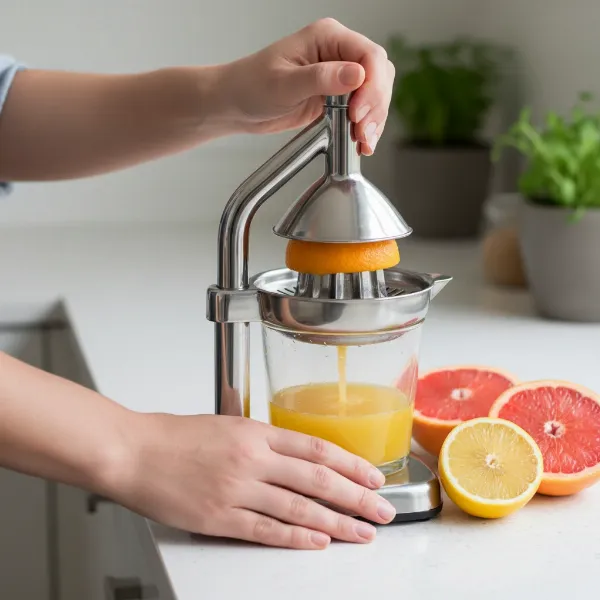 Person demonstrating proper, steady technique when pressing a manual citrus juicer for optimal juice extraction.
Neglecting Regular Cleaning and Maintenance
While not directly related to the act of juicing, poor cleaning habits can indirectly contribute to handle breakage. Dried pulp, seeds, and juice residue can accumulate in the juicer’s moving parts, especially around the handle’s pivot points. This build-up increases friction, making the juicer harder to operate smoothly. When resistance increases, users naturally apply more force, unknowingly stressing the handle beyond its limits. Thorough cleaning after each use is crucial to maintain smooth operation and prevent unnecessary strain.
Storing Incorrectly
Even when not in use, a manual press juicer can be vulnerable. Storing it with the handle in an awkward or unsupported position can create constant, subtle stress on its joints. Dropping the juicer, even from a small height, or allowing it to be impacted by other kitchen items can cause hairline cracks or weaken the handle’s integrity, leading to eventual breakage.
Ignoring Material Limitations
The durability of a manual press handle is heavily dependent on the material it’s made from. Many budget-friendly juicers are constructed from cheaper alloys, often referred to as “pot metal,” or lower-grade plastics. These materials are inherently weaker and more brittle, especially at stress points like hinges. Handles made from these materials are significantly more prone to snapping under the types of forces commonly applied during juicing. Enamel coatings on some metal juicers can also chip, potentially exposing the underlying metal to corrosion from citric acid, further weakening the structure.
“The difference in longevity between a well-made stainless steel or cast-iron manual press and a cheaper, lightweight alloy model is significant. Investing in quality materials is investing in years of reliable service.”
How to Extend the Life of Your Manual Press Handle
Preserving your manual press juicer’s handle involves a combination of mindful usage and diligent care.
Best Practices for Juicing
- Use Appropriate Force: Apply firm, steady pressure rather than brute force. If you find yourself straining significantly, it might be a sign the fruit is too large, too hard, or the juicer isn’t designed for that task. Listen to your juicer; it shouldn’t feel like a wrestling match.
- Center Fruits Correctly: Always place the fruit half centrally on the cone or pressing plate. For hinged juicers, position the fruit cut-side down for optimal leverage and juice extraction.
- Smooth, Steady Motion: Operate the handle with a continuous, deliberate motion. Avoid sudden jerks or twisting actions, which can concentrate stress on specific points of the handle.
- Pre-cut Larger Fruits: For fruits like larger oranges or grapefruits, consider cutting them into quarters instead of halves if they don’t fit comfortably or require excessive force.
Maintenance Tips
- Clean Immediately After Use: Wash your manual press thoroughly with warm, soapy water after each juicing session. Pay special attention to removing all pulp and residue from the pressing mechanism and handle joints to prevent buildup and friction.
- Inspect for Wear and Tear: Periodically check the handle, hinges, and other moving parts for any signs of cracks, bends, or corrosion. Addressing small issues early can prevent larger problems.
- Store Properly: Store your juicer in a safe place where it won’t be dropped or knocked around. If it’s a countertop model, ensure the handle is in a stable, resting position.
Choosing the Right Juicer
When buying a new manual press, durability should be a primary consideration.
- Invest in Durable Materials: Look for juicers made from high-quality materials like heavy-duty stainless steel or cast iron. These materials offer superior strength and resistance to corrosion and bending, making them far less prone to handle breakage.
- Read Reviews for Handle Durability: Customer reviews often highlight common issues like handle breakage. Prioritize models with consistent positive feedback regarding their build quality and longevity. Consumer preferences strongly favor durability and reinforced mechanisms.
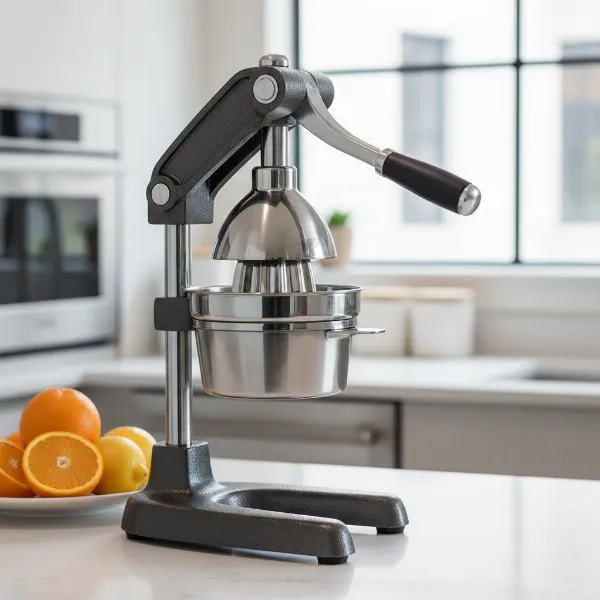 High-quality, heavy-duty manual citrus press juicer made from stainless steel or cast iron on a kitchen counter.
When to Consider a Replacement or Upgrade
Despite your best efforts, sometimes a manual press handle reaches the end of its life. If you notice significant cracks, bending that affects functionality, or repeated breakage, it might be time to consider a replacement. For those who juice frequently or in large quantities, upgrading to a more robust manual press (e.g., a heavy-duty countertop lever press) or even an electric citrus juicer could be a worthwhile investment to save effort and prevent future handle issues.
Conclusion
A broken handle on your manual press juicer doesn’t have to be an inevitable fate. By understanding the common mistakes—such as applying excessive force, improper fruit placement, neglecting cleaning, or overlooking material quality—you can take proactive steps to prevent damage. Adopting best practices for juicing, performing regular maintenance, and making informed choices when purchasing a new juicer will ensure your manual press remains a reliable and enduring tool in your kitchen. Treat your juicer with care, and it will reward you with delicious, fresh juice for many years to come. What steps will you take today to extend the life of your beloved citrus press?
Frequently Asked Questions
Can I fix a broken manual juicer handle?
Repairing a broken handle depends heavily on the material and the nature of the break. Small cracks in metal might be welded by a professional, but plastic handles are often difficult to repair permanently in a food-safe and durable way. Often, replacement is the more reliable solution.
What materials are best for manual press handles?
For maximum durability, look for manual press handles made from high-grade stainless steel or cast iron. These materials are known for their strength and resistance to the forces and corrosive effects of citrus juice.
How much pressure is too much for a manual juicer?
If you’re straining or the juicer is creaking and groaning, you’re likely applying too much pressure. The goal is efficient juice extraction with firm, steady force, not to completely pulverize the fruit. If resistance is high, consider re-positioning the fruit or cutting it smaller.
Are all manual citrus presses prone to handle breakage?
No. While cheaper models made with inferior materials (“pot metal” or weak plastics) are more susceptible, well-designed manual presses made from durable materials like stainless steel or cast iron are built to withstand regular use and are far less prone to handle breakage.