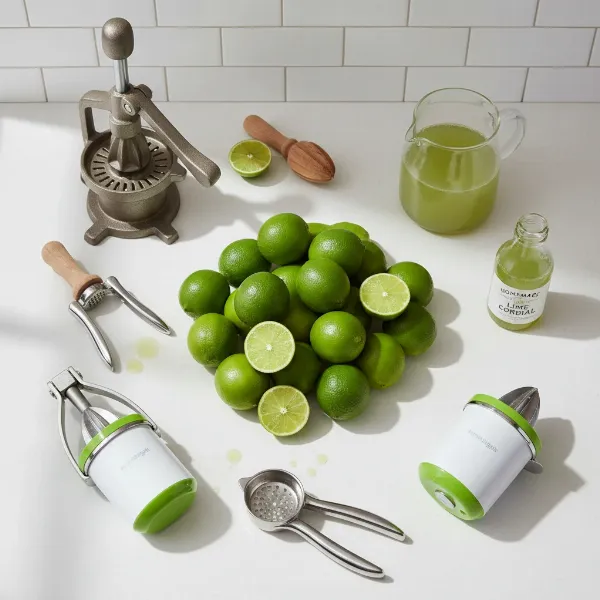
In today’s fast-paced world, maintaining a healthy lifestyle often means finding clever ways to integrate nutritious habits into limited spaces. For those living in compact apartments, tiny houses, or bustling dorm rooms, the dream of fresh, homemade juice might seem out of reach due to bulky appliances. However, a new generation of innovative, space-saving juicers is changing the game, making it easier than ever to enjoy vitamin-packed beverages without sacrificing precious countertop real estate. This comprehensive guide will help you navigate the world of compact juicers, detailing the types available, crucial buying considerations, and our top picks designed specifically for small kitchens and dorm rooms.
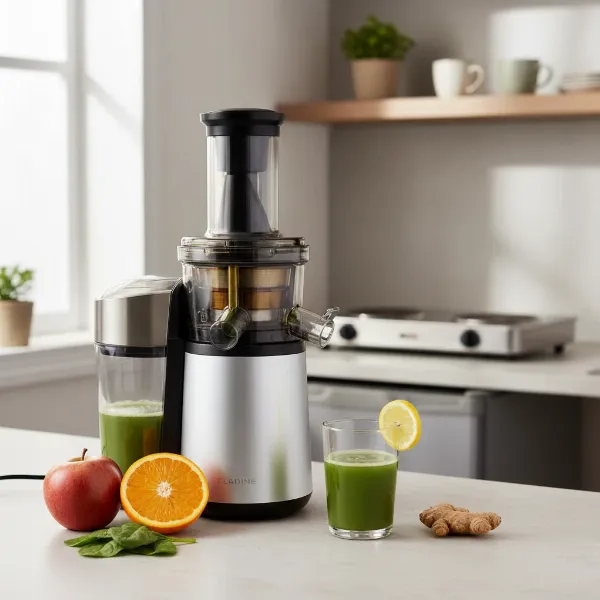 A sleek, compact juicer on a tidy kitchen countertop in a small apartment, with fresh fruits and vegetables.
Understanding the Types of Juicers for Compact Living
When selecting a juicer for a small space, understanding the fundamental differences between types is key. Each offers unique advantages and disadvantages in terms of size, performance, and the kind of juice it produces.
Centrifugal (Fast) Juicers
Centrifugal juicers are often the go-to for speed and affordability. They operate by shredding fruits and vegetables with a fast-spinning blade disc, then using centrifugal force to separate the juice from the pulp through a fine mesh strainer.
- Pros: These juicers are typically faster, processing ingredients quickly with minimal pre-chopping thanks to wider feed chutes. They are also generally more budget-friendly and straightforward to use, often featuring a simple on/off switch.
- Cons: The high-speed operation can generate heat and introduce more air, leading to faster oxidation, a foamy top layer, and juice that should ideally be consumed immediately for maximum nutrient retention. They also tend to be noisier and less efficient at extracting juice from leafy greens, which can sometimes get caught in the blades.
- Best for: Individuals prioritizing speed and a lower upfront cost, who primarily juice harder fruits and vegetables and plan to drink their juice right away.
Masticating (Slow/Cold-Press) Juicers
Masticating juicers, also known as slow or cold-press juicers, work by “chewing” or crushing produce slowly using an auger, then pressing it against a screen to extract the juice. This slower process is gentler on ingredients.
- Pros: They are significantly quieter than centrifugal models and excel at extracting a higher yield of juice, especially from leafy greens and fibrous vegetables, resulting in drier pulp and less waste. The minimal heat and air exposure during juicing help preserve more nutrients, enzymes, and a fresher flavor, allowing the juice to last longer in the fridge.
- Cons: Masticating juicers are generally more expensive and operate at a slower pace, requiring more time. Their feed chutes are often narrower, necessitating more pre-chopping of ingredients. Cleaning can also be more involved due to multiple parts and potential for pulp to get stuck.
- Best for: Health-conscious individuals seeking the highest nutrient retention, maximum juice yield, quieter operation, and are willing to invest more time and money.
Citrus Juicers
Specifically designed for citrus fruits, these juicers come in manual and electric forms. Electric models feature a motorized reamer that spins, effortlessly extracting juice from halved citrus.
- Pros: They are exceptionally efficient for juicing oranges, lemons, limes, and grapefruits, often extracting a significant amount of juice quickly. Many compact electric models exist, and cleaning is typically simple, with some parts being dishwasher-safe.
- Cons: The primary limitation is their specialization; they are designed exclusively for citrus fruits and cannot process other types of produce.
- Best for: Those who frequently consume fresh citrus juice for morning beverages, cooking, or cocktails, and desire a dedicated, easy-to-use appliance for this purpose.
Comprehensive Buying Guide for Your Compact Juicer
Choosing the ideal juicer for a small kitchen or dorm room goes beyond just its core function. Several factors become particularly important when space and lifestyle are constraints.
Determine Your Usage Needs
Before diving into models, consider how you’ll use your juicer. How often will you juice? Are you making single servings for yourself, or do you need enough for a couple of people? Do you mostly crave orange juice, or are green juices and hard vegetables on your menu? Your answers will guide your choice between a quick centrifugal model or a more thorough masticating one. For instance, if you plan on making just 8-16 ounces of juice per cycle, a smaller capacity unit like the Nama J3 could be ideal.
Key Factors to Evaluate
When space is at a premium, every inch and every feature counts.
- Size and Footprint: This is paramount for small kitchens and dorms. Look for “compact,” “mini,” or “small footprint” in product descriptions. Consider both the countertop dimensions and the height, especially if you plan to store it under cabinets. Some taller models, like the Kuvings Auto10S, might not fit beneath standard kitchen cabinets. Vertical masticating juicers can offer a smaller countertop footprint, though they might be taller.
- Ease of Assembly and Use: In a confined space, fiddly assembly can be a major deterrent. Opt for models with straightforward setup, intuitive controls, and minimal parts. The Breville Juice Fountain Compact, for example, is lauded for its easy assembly and user-friendly single on-off button.
- Effortless Cleaning: Juicers can be notoriously difficult to clean due to pulp and fibers. Prioritize models with dishwasher-safe parts or designs that are quick to rinse. Many come with cleaning brushes, which are a helpful addition. A juicer that is a hassle to clean often ends up unused.
- Noise Level: In a dorm or a shared small living space, a noisy appliance can be disruptive. Masticating juicers are generally quieter, operating with a soft mechanical buzz, whereas centrifugal juicers can be quite loud.
- Juice Quality and Yield: If you’re investing in a juicer for health benefits, you want maximum extraction and high-quality juice. Drier pulp typically indicates a better yield. While centrifugal juicers are faster, masticating juicers often produce more juice with less foam and better nutrient preservation.
- Durability and Warranty: A juicer is an investment. Look for models with robust construction and a good warranty, indicating the manufacturer’s confidence in the product’s longevity. Nama juicers, for instance, often come with impressive 15-year warranties.
- Price and Value: Compact juicers range in price. You can find decent budget options under $100, while premium models can exceed $500. Consider your budget against your desired frequency of use and commitment to juicing.
Top Juicers for Small Kitchens and Dorm Rooms
Based on extensive testing and user reviews, here are some of the best juicers that balance compact design with efficient performance, ideal for limited living spaces.
| Model | Type | Key Features for Small Spaces | Pros | Cons | Dimensions (approx.) | Weight (approx.) |
|---|---|---|---|---|---|---|
| NutriBullet Slow Juicer | Masticating | Most compact tested, low noise | Superior extraction, very quiet, wide-mouth hopper for less pre-cutting, many dishwasher-safe parts, convenient juice nozzle cap. | Can produce some foam. | 11.5″ x 7.8″ x 14.4″ | 11 lbs |
| Nama J3 Cold Press Juicer | Masticating | Compact, lightweight, “best for small spaces” | Excellent yield for single servings, hands-free operation, beautiful design, easy to clean (removable parts for rinsing), 15-year warranty, versatile (nut milks). | Smaller hopper (not for batch juicing), struggled with kale, parts are hand-wash only, tall design might not fit under low cabinets, no sorbet/extra attachments. | 8.9″ x 6.5″ x 15.4″ | 9.7 lbs |
| Magic Bullet Mini Juicer | Centrifugal | Smallest footprint, budget-friendly | Very compact and affordable, easy to assemble, comes with a to-go cup, performs well with soft and hard produce, quick juicing. | Noisy, can be messy with splattering, poor performance with leafy greens, only 470ml capacity, not for frozen fruits/vegetables. | 7″ x 6″ x 11.5″ | 3.5 lbs |
| Breville BJE200XL Juice Fountain Compact | Centrifugal | Sleek, compact design, built-in pulp container | Fast operation, user-friendly (one button), integrated froth catcher, good juice quality for carrots/kale/ginger, dishwasher-safe non-electric parts, “great for apartment living”. | Requires some pre-cutting for large apples, slightly noisier than masticating juicers. | 9.1″ x 9.8″ x 15.7″ | 9.68 lbs |
| AMZCHEF Cold Press Juicer | Masticating | Compact footprint, budget pick | Very affordable for a slow juicer, easy assembly, surprisingly strong performance for the price, modest space requirement. | Plasticky construction, may lack warranty, parts are hand-wash only, juice yields aren’t always highest, can be somewhat louder for a cold press. | 16.3″ x 5.8″ x 7.1″ | 6.3 lbs |
| Kuvings Auto 6 Hand Juicer | Masticating | Good for smaller kitchens, intuitive, quiet | Easy to use (one button with reverse function), very quiet, handles kale/ginger/apple well, comes with ice cream maker attachment, 15-year engine warranty. | Not dishwasher-safe (but includes cleaning brushes), no citrus-juicing function, many parts to hand-wash. | (Designed for smaller kitchens) | (Moderate) |
| Omega Vertical Cold Press Juicer (VSJ843QR) | Masticating | Vertical orientation for small countertop footprint | Almost silent operation, excellent for leafy greens, high juice yield, no-drip tap, 15-year warranty, dishwasher-safe non-electric parts. | Longer juicing time, difficult to detach base for cleaning, no froth separator, requires pre-chopping. | 9.14″ x 15.67″ x 9.49″ | 11.5 lbs |
Essential Tips for Using and Maintaining Your Compact Juicer
To ensure your compact juicer remains a long-term companion in your healthy living journey, proper usage and maintenance are crucial.
Maximize Your Juicer’s Lifespan
- Pre-chop if necessary: For juicers with narrower feed chutes, cutting ingredients into smaller pieces not only prevents blockages but also helps the machine operate more efficiently and quietly.
- Alternate ingredients: When juicing a mix of soft and hard produce, alternate them to help push everything through smoothly and maximize extraction.
- Don’t overfill: Respect your juicer’s capacity limits to avoid straining the motor and creating a mess.
- Use the pusher gently: For models that include a pusher, apply steady, gentle pressure rather than forcing ingredients, especially with masticating juicers.
Effortless Cleaning and Storage
The thought of cleaning can be a major barrier to regular juicing, especially in a small space where a sink might also be compact.
- Clean immediately: The golden rule of juicer maintenance is to clean it right after use. Fresh pulp and juice are much easier to rinse off than dried-on residue.
- Hand-wash vs. Dishwasher-safe: Check your manual. Many non-electric parts are dishwasher-safe, but others require hand-washing. For hand-washing, warm, soapy water and the provided cleaning brushes are usually all you need. Pay special attention to mesh screens where fibers can cling.
- Disassemble thoughtfully: Learn the quick steps to take apart your juicer for cleaning and reassemble it. Models with fewer, easily detachable parts are a boon for small spaces.
- Smart storage: If your juicer is too tall for under-cabinet storage, consider a rolling cart it can live on, or a designated shelf in a pantry if you have one. For dorms, a corner of a desk or a sturdy shelf might be the ideal spot. Some ultra-compact models can even fit into a deep drawer.
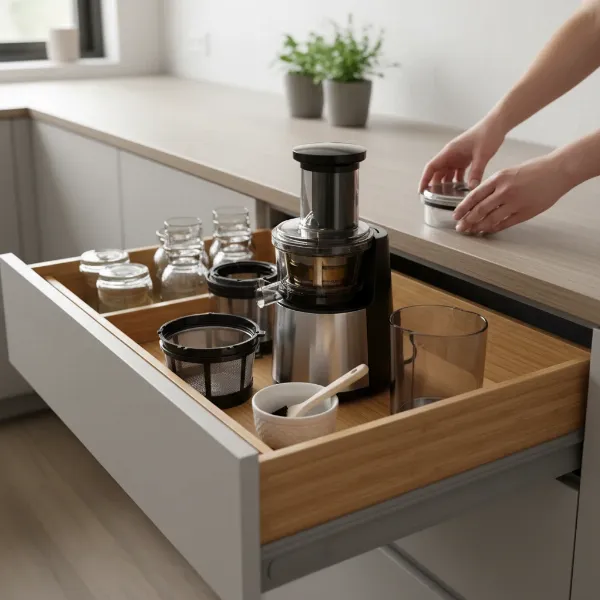 A person easily cleaning parts of a compact juicer in a small sink, or placing it in a clever storage spot.
Where to Purchase Your Ideal Compact Juicer
You can find a wide array of compact juicers at major online retailers like Amazon, as well as specialized kitchen appliance stores such as Williams Sonoma, Target, and Wayfair. When shopping online, always check product dimensions carefully and read user reviews focused on space-saving aspects. Verify warranty information and return policies before making a purchase to ensure it fits both your space and your needs.
Conclusion
Embracing the benefits of fresh, homemade juice doesn’t require a sprawling kitchen. With the right compact juicer, even the smallest kitchens and dorm rooms can become personal health hubs. Whether you opt for the rapid convenience of a centrifugal model or the nutrient-rich efficiency of a masticating juicer, prioritizing size, ease of cleaning, and your specific juicing habits will lead you to the perfect fit. From the quiet efficiency of the NutriBullet Slow Juicer to the budget-friendly practicality of the Magic Bullet Mini, there’s a compact solution designed to help you unlock a world of vibrant, healthy beverages.
What refreshing, nutrient-packed concoction will you create first in your new compact juicer?
Frequently Asked Questions
What’s the main difference between slow and fast juicers for small spaces?
The core difference lies in speed and extraction method. Fast (centrifugal) juicers shred produce quickly, making them convenient but often noisier and less efficient for leafy greens. Slow (masticating) juicers crush ingredients gently for higher yield, better nutrient preservation, and quieter operation, but take more time and are typically more expensive. For small spaces, both types offer compact models, so choose based on your priorities for speed, nutrient retention, and noise.
How much should I expect to pay for a good compact juicer?
The cost of a good compact juicer varies significantly based on its type and features. Basic centrifugal models, like the Magic Bullet Mini, can be found for under $100. More advanced compact masticating juicers, such as the Nama J3 or NutriBullet Slow Juicer, typically range from $150 to $500. Investing more often means better yield, quieter operation, and enhanced durability, but budget-friendly options can still deliver excellent results for casual juicers.
Can I just use a blender instead of buying a compact juicer?
While a blender can create “juice-like” drinks (smoothies), it doesn’t truly extract juice in the same way a juicer does. Blenders pulverize whole ingredients, retaining all the pulp and fiber, which results in a thicker consistency. Juicers separate the liquid from the insoluble fiber, yielding a smoother, clearer beverage. You can use a fine-mesh strainer or cheesecloth with a blender to mimic juicing, but it’s often messier and less efficient than a dedicated juicer.
How important is the noise level for a juicer in a dorm room?
The noise level is a crucial consideration for dorm rooms or any shared small living space. Centrifugal juicers are generally louder, often comparable to a blender, which can be disruptive. Masticating juicers, however, operate much more quietly, making them a more considerate choice for early mornings or late nights when others might be sleeping or studying. Prioritizing a quieter model can significantly improve the user experience in a confined environment.