Welcome to citrusjuicerr.com! As Lan, with over a decade of experience in the world of fruit juicers, especially citrus models, I’ve seen technology evolve and deeply understand consumer needs. My passion is to share practical knowledge and real-world insights, helping you choose the perfect juicer and ensure it serves you effectively for years. Let’s dive into the vibrant world of citrus juicers together, exploring how to get the most out of every single fruit.
Citrus Juicers: A Detailed Buying Guide and Top Products
Embarking on the journey to find the ideal citrus juicer can be exciting, yet a bit overwhelming with the myriad of options available. From a quick squeeze for a single lemon to batch juicing oranges for a family, understanding the different types and what to look for is key. This comprehensive guide will equip you with all the knowledge you need, ensuring you select a juicer that perfectly fits your lifestyle and maximizes every juicy drop.
Popular Types of Citrus Juicers
Citrus juicers come in various forms, each designed to meet different needs in terms of effort, speed, and volume. Knowing these distinctions is the first step towards making an informed choice.
-
Manual Juicers
Manual juicers are the simplest and often most affordable options, perfect for those who enjoy the hands-on approach or have limited space.- Handheld Squeezers (Hinged): These are often made of metal or sturdy plastic and feature two hinged handles that you press together to extract juice from a halved citrus. They are excellent for lemons and limes, offering good leverage for quick tasks like making cocktails or adding a splash of fresh juice to a dish.
- Reamers (Manual Rotary): Comprising a cone-shaped head, typically plastic, glass, or wood, these require you to twist a cut citrus half onto the reamer. Juice collects in a basin below. Reamers are budget-friendly, easy to clean, and compact, making them suitable for occasional use or single servings.
- Lever Press Juicers (Manual Countertop): These robust machines feature a powerful lever mechanism that presses citrus halves against a cone. They require more counter space but significantly reduce physical effort and extract a high volume of juice quickly, ideal for larger fruits like oranges and grapefruits.
-
Electric Juicers
Electric juicers automate the juicing process, saving time and effort, especially for those who enjoy fresh juice daily or in larger quantities.- Automatic Rotary Juicers: Similar in concept to manual reamers, these models have a motorized reaming cone. You simply place a halved citrus onto the cone and apply gentle pressure, and the machine rotates to extract juice. Many models offer interchangeable cones for different fruit sizes and features like adjustable pulp control. They are efficient and relatively affordable, suitable for everyday family use.
- Electric Press Juicers: Combining the power of a motor with the pressing action of a lever, these are the most advanced electric citrus juicers. They provide exceptional juice yield with minimal effort, easily handling all sizes of citrus. While often pricier, they are a worthwhile investment for avid juicers or those seeking professional-grade performance and durability.
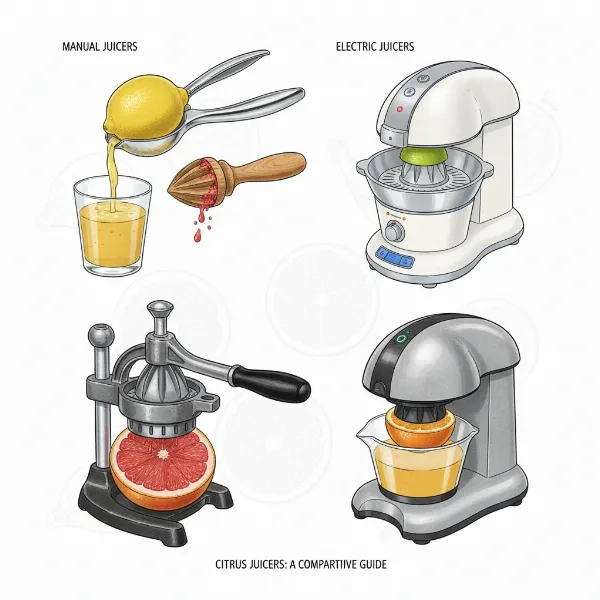 Illustration of various citrus juicers, including handheld, reamer, lever press, and electric models.
Your Guide to Choosing the Right Citrus Juicer
Selecting the best citrus juicer involves understanding your personal needs and priorities. Consider these key factors before making your purchase.
-
Identify Usage Needs:
- Frequency of Use: How often do you plan to juice? For occasional use, a manual handheld squeezer or reamer might be sufficient. If you envision fresh juice daily or several times a week, an electric model will offer unmatched convenience and efficiency.
- Quantity of Juice Needed: Are you squeezing a single lemon for a recipe, or preparing a pitcher of orange juice for breakfast? Small-batch needs are easily met by manual juicers, while electric models excel at handling larger quantities without tiring your hand.
- Types of Fruits You’ll Juice: While all citrus juicers handle lemons and limes, if you frequently juice larger fruits like oranges and grapefruits, look for models with larger reamers or pressing mechanisms that can accommodate them. Some juicers come with multiple cone sizes for versatility.
-
Essential Factors to Consider:
- Power and Speed: For electric juicers, higher wattage generally translates to more power and faster juicing. This is important for efficiency, especially when juicing large batches.
- Material and Durability: Look for high-quality, food-grade materials such as stainless steel for longevity and easy cleaning, or sturdy, BPA-free plastic. Glass components are elegant but more fragile. Durable construction ensures your juicer withstands regular use.
- Ease of Cleaning: Juicers can be messy. Prioritize models with easily detachable, dishwasher-safe parts. Simpler designs often mean quicker cleanup. The less time you spend cleaning, the more you’ll use it.
- Safety Features: A stable base with non-slip feet is crucial, particularly for electric and lever-press models, to prevent movement during operation. Overload protection for electric motors is also a beneficial safety feature.
- Pulp Control: Some electric models offer adjustable pulp filters, allowing you to customize your juice’s texture from pulp-free to extra-pulpy. Manual reamers typically have built-in strainers to catch seeds and larger pulp.
- Brand and Price: Reputable brands often come with better warranties and customer support. Set a budget, but remember that investing a bit more in a quality juicer can pay off in durability and performance.
Comparison Table of Best Citrus Juicers
To help you visualize the differences, here’s a comparison of common citrus juicer types and their key attributes, referencing popular styles and models on the market.
| Feature | Manual Handheld Squeezer (e.g., Chef’n FreshForce) | Manual Reamer (e.g., OXO Good Grips) | Electric Rotary (e.g., Black+Decker CJ625) | Electric Press (e.g., Breville Citrus Press Pro) |
|---|---|---|---|---|
| Effort Required | Medium | High | Low | Very Low |
| Juicing Speed | Medium | Slow | Fast | Very Fast |
| Juice Yield | Good | Moderate | Very Good | Excellent |
| Pulp Control | Minimal (depends on strainer design) | Minimal (strains pulp/seeds) | Often adjustable | Good (removable filter) |
| Cleaning Ease | Very Easy (often dishwasher safe) | Very Easy | Easy (removable parts) | Moderate (more components) |
| Capacity | Small batches | Single fruit | Medium to Large batches | Large batches |
| Best For | Cocktails, small recipes | Occasional use, limited space | Daily juice, family use | High volume, professional results |
| Price Range | $15 – $30 | $10 – $25 | $30 – $70 | $150 – $300+ |
Top Citrus Juicers You’ll Love
Based on user reviews and expert testing, certain models consistently stand out for their performance and reliability.
- Chef’n FreshForce Citrus Juicer: This handheld squeezer is celebrated for its innovative dual-gear mechanism, providing extra leverage that significantly reduces the effort needed to extract juice from lemons and limes. It’s incredibly efficient and a favorite for bartenders and home cooks alike.
- Black+Decker CJ625 Citrus Juicer: An excellent budget-friendly electric option, the Black+Decker CJ625 offers reliable performance for everyday juicing. It often includes two reamer sizes for various citrus fruits and features auto-reversing action for maximum juice extraction and adjustable pulp control.
- Breville Citrus Press Pro: For those seeking a premium experience, the Breville Citrus Press Pro is a top-tier electric press juicer. Its powerful motor, quiet operation, and active-arm pressing system ensure superb juice yield from all citrus types with minimal effort. It’s built with durable materials, making it a long-lasting investment.
- KitchenAid Citrus Squeezer: A robust manual squeezer, the KitchenAid model is praised for its ergonomic design and sturdy construction. It effectively juices lemons and limes, often featuring an integrated bowl to catch juice and a spout for easy pouring, adding to its convenience.
- OXO Good Grips Small Citrus Juicer: This versatile manual reamer comes with two interchangeable reamers, making it suitable for both small limes and larger oranges. It includes a measuring cup to collect juice, simplifying recipe preparation and reducing the need for extra dishes.
Tips for Using and Maintaining Your Citrus Juicer
Even the best juicer benefits from proper usage and care. These tips will help you maximize your juice yield and extend your appliance’s lifespan, featuring the famous microwave trick.
- Maximizing Every Drop (The Microwave Trick and More):
You’ve invested in a great juicer, now let’s ensure you get every last drop!- The Microwave Trick: Before slicing, place your whole citrus fruit (lemon, lime, or orange) in the microwave and heat on high for 20 to 30 seconds, or until it’s warm to the touch. This gentle warming helps to burst the internal juice capsules and soften the membranes, making it significantly easier to extract more juice with less effort. Allow it to cool slightly before handling.
- Roll it Out: Firmly roll the citrus on your kitchen counter for about 10 seconds before cutting. This simple action helps to break down the internal membranes, loosening the juice inside, and is a fantastic complement to the microwave trick.
- Cut Smart: For some manual squeezers, cutting the citrus lengthwise instead of crosswise can sometimes yield more juice, as it aligns with the internal segments more effectively.
- Zest Before Juicing: If your recipe calls for zest, always remove it before you juice the fruit. It’s much harder to zest a squishy, juiced-out citrus!
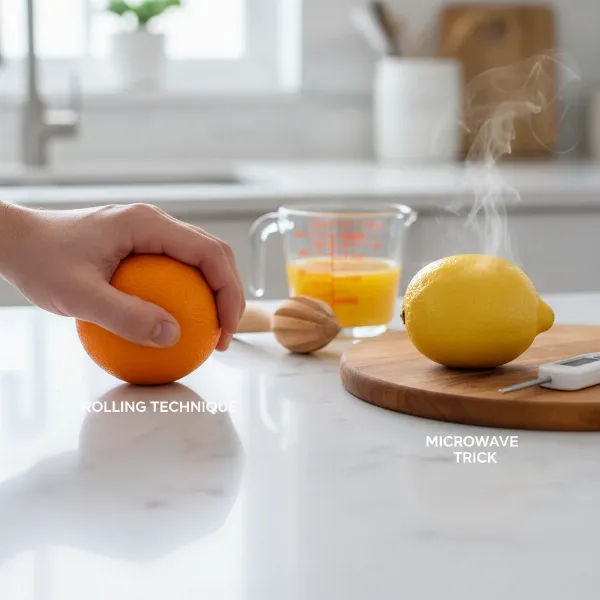 A hand rolling a whole orange on a counter next to a microwaved lemon ready for juicing.
-
Proper Usage Techniques:
- Avoid Overloading: For electric juicers, resist the urge to pack too much fruit at once. Follow the manufacturer’s capacity guidelines to prevent straining the motor and ensure optimal performance.
- Gentle and Consistent Pressure: Whether manual or electric, applying steady, gentle pressure is more effective than forceful, jerky movements. This helps to extract juice efficiently without damaging the fruit’s pith, which can impart a bitter taste.
- Pre-Pulp and Seed Removal: For some juicers, especially electric ones, removing large seeds and excessive pulp before juicing can prevent clogging and ensure smoother operation.
-
Cleaning and Storage for Longevity:
Regular cleaning is paramount for hygiene and extending the life of your citrus juicer.- Clean Immediately: Always clean your juicer right after use. Dried pulp and juice residue are much harder to remove.
- Disassemble and Rinse: For models with removable parts, disassemble them completely and rinse under warm water to remove loose pulp and juice.
- Wash with Mild Soap: Wash removable components with mild dish soap and a soft sponge or brush. For tough-to-reach areas like strainer holes and crevices, a small brush (like a toothbrush or pipe cleaner) can be invaluable.
- Dishwasher Safe? Many removable parts are dishwasher-safe, but always check your manual. For intricate manual squeezers, handwashing is often preferred to prolong the life of hinge pins and other delicate components.
- Wipe Down the Base: For electric juicers, wipe the motor base with a damp cloth. Never immerse the motor unit in water.
- Air Dry Thoroughly: Ensure all parts are completely dry before reassembling or storing to prevent mold and mildew growth.
- Proper Storage: Store your juicer in a clean, dry place, away from dust and direct sunlight. If it’s a compact model, storing it in a cabinet can help keep it pristine.
Where to Buy Citrus Juicers?
Finding your ideal citrus juicer is easier than ever with a variety of purchasing options available.
- Online Retailers: Websites like Amazon, Williams Sonoma, Target, and Wayfair offer a vast selection, competitive pricing, and user reviews that can guide your decision. Be sure to check seller ratings and return policies.
- Department and Specialty Stores: Major department stores and kitchen appliance retailers often carry a curated selection of popular models, allowing you to see and touch the products before buying. Sales associates can also provide expert advice.
- Manufacturer Websites: Purchasing directly from the brand’s website can sometimes offer exclusive deals, full warranty coverage, and access to detailed product information and support.
When buying, always compare prices across different platforms, read recent customer reviews, and verify warranty and return policies to ensure a smooth and satisfying purchase.
In conclusion, the journey to fresh, vibrant citrus juice is made effortless with the right tools and techniques. From selecting the perfect citrus juicer—whether a simple handheld squeezer or a powerful electric press—to implementing smart usage tips like the incredible microwave trick, every step enhances your juicing experience. Remember that proper cleaning and maintenance are key to the longevity of your appliance, ensuring countless glasses of delicious, homemade juice. What fresh citrus concoction will you create first with your perfectly juiced fruits?
Frequently Asked Questions
How does microwaving citrus fruit help extract more juice?
Briefly microwaving citrus for 20-30 seconds warms the fruit, causing the internal juice capsules to burst and the membranes to soften. This makes it significantly easier to extract more juice with less effort when you squeeze it.
What are the main types of citrus juicers available?
Citrus juicers primarily fall into two categories: manual and electric. Manual options include handheld squeezers, reamers, and lever presses, while electric models range from automatic rotary juicers to powerful electric presses, each catering to different juicing volumes and effort levels.
How often should I clean my citrus juicer?
It’s crucial to clean your citrus juicer immediately after every use to prevent pulp and juice residue from drying and hardening, which can make cleaning more difficult and potentially affect hygiene and performance.
Is an electric citrus juicer worth the investment?
An electric citrus juicer is a worthwhile investment for those who juice frequently or in large quantities, as it offers speed, efficiency, and significantly less effort compared to manual methods. For occasional users, a quality manual juicer might suffice.
What materials are best for a durable citrus juicer?
High-quality citrus juicers are often made from durable materials like stainless steel, robust BPA-free plastic, or cast iron, ensuring longevity and efficient performance. Consider the material of both the reamer/press and the body for overall durability.