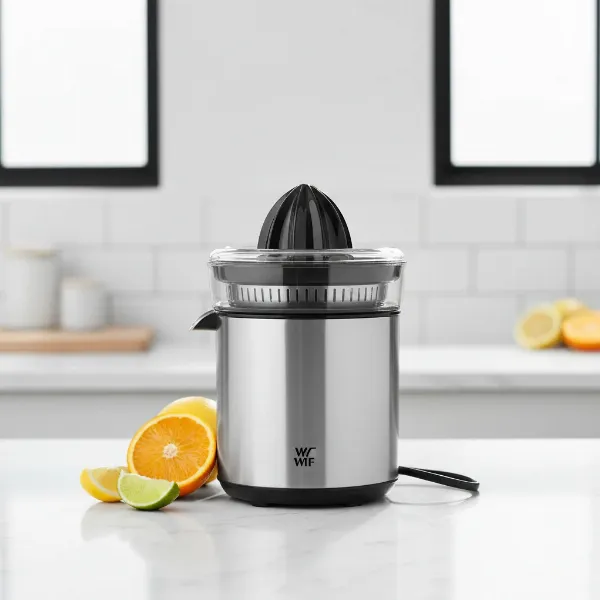
Freshly squeezed citrus juice is the lifeblood of exceptional cocktails. From a zesty Margarita to a sophisticated Whiskey Sour, the vibrant, crisp notes of fresh lemon, lime, orange, or grapefruit can make or break a drink. As an experienced admirer of citrus, understanding the nuances of juicers is key to consistently delivering quality, whether you’re a home cocktail enthusiast or managing a bustling professional bar. This comprehensive guide will walk you through the various types of citrus juicers, essential considerations for selection, and top recommendations to ensure every sip is infused with perfect, fresh flavor.
Types of Citrus Juicers for Cocktail Enthusiasts and Bars
Table is empty.The world of citrus juicers offers a spectrum of designs, each with unique advantages and drawbacks suited to different needs. Understanding these categories is the first step in finding your ideal bar companion.
Manual Citrus Juicers
Manual juicers are often the go-to for their simplicity, portability, and classic appeal. They rely on human effort to extract juice.
- Handheld/Squeeze Juicers: These are compact, often brightly colored, and designed for single-fruit juicing. You place a half citrus fruit cut-side down into a perforated cup and squeeze the handles together.
- Pros: Highly affordable, portable, easy to clean, quick for small quantities of juice (a few cocktails), and ideal for home bars where space is at a premium. Bartenders often refer to these as “elbow” juicers due to the motion involved.
- Cons: Can be labor-intensive for larger volumes, especially with firm limes, leading to hand fatigue. Yield can sometimes be less efficient compared to other types.
- Manual Lever Press Juicers: These heavy-duty juicers, often seen in professional settings, feature a large lever that presses a reamer or a dome against the fruit. The fruit is typically placed on a raised cone, and the lever is pulled down to exert significant force.
- Pros: Excellent juice extraction, high yield, robust and durable construction, relatively fast for medium to high volumes. Many models are built to last and can handle frequent use without strain.
- Cons: More expensive and significantly larger than handheld options, requiring dedicated counter space. While less strenuous than squeeze juicers, they still require some physical effort.
- Reamers: The most basic form of manual juicing, a reamer is a cone-shaped tool that you twist into the cut half of a citrus fruit to extract juice. They can be made of wood, plastic, or metal.
- Pros: Extremely simple, inexpensive, and takes up minimal space. Great for just a splash of juice.
- Cons: The most labor-intensive and least efficient method for extracting juice, producing a lower yield. Pulp and seeds often fall directly into the juice, requiring straining. Not suitable for even moderate volumes.
Electric Citrus Juicers
Electric juicers take the physical effort out of juicing, making them ideal for larger batches or for those who prefer convenience.
- Pressure-Activated Electric Juicers: These models typically feature a rotating reamer activated by pressing a citrus half down onto it. They often come with a collection pitcher.
- Pros: Minimal effort required, faster for medium quantities of juice, consistent results. Many offer good pulp control features. Examples like the Black+Decker or Smeg are popular for home use.
- Cons: Can be bulkier than handheld manual juicers. Some models might struggle with very large or very small fruits, and the reamer might occasionally dig into the pith, introducing bitterness if not careful.
- Electric Lever Press Juicers: Combining the power of an electric motor with the leverage of a press, these are the workhorses of high-volume juicing. You simply place the fruit, pull down a lever, and the machine does the rest.
- Pros: Unmatched efficiency and speed, minimal human effort, ideal for very high volumes (e.g., busy bars, catering events). They consistently deliver high yields with excellent juice quality. The Breville Citrus Press Pro is a prime example.
- Cons: The most expensive option by far, and they typically have the largest footprint, requiring substantial counter space. These are generally considered commercial-grade appliances.
Comparison of Performance: Which is Right for You?
| Juicer Type | Best For | Effort Level | Speed (Volume) | Cleaning Ease | Space Required | Typical Cost Range |
|---|---|---|---|---|---|---|
| Handheld Squeeze | Home bar, 1-15 cocktails | Medium-High | Slow (Small) | Very Easy | Minimal | $10 – $30 |
| Manual Lever Press | Home bar, small-to-medium bar, up to 50 cocktails | Medium | Moderate (Medium-High) | Easy | Moderate | $50 – $150 |
| Pressure-Activated Electric | Home bar, medium volume, 20-40 cocktails | Low | Moderate (Medium) | Easy | Moderate | $25 – $100 |
| Electric Lever Press | High-volume bar, commercial use, 50+ cocktails | Very Low | Fast (High) | Moderate | Large | $150 – $300+ |
Key Factors When Selecting a Citrus Juicer for Your Bar
Choosing the right citrus juicer involves more than just picking the prettiest model. Consider these factors to ensure your selection perfectly matches your cocktail-making needs.
Volume and Frequency of Use
This is perhaps the most critical factor. How much juice do you need, and how often?
- Home Bar/Occasional Use: If you’re making cocktails a few times a week for a small gathering, a manual handheld juicer or a compact electric pressure-activated model is usually sufficient. You’ll appreciate the easy cleanup and minimal storage.
- Busy Home Bartender/Small Bar: For frequent use or entertaining larger groups, consider a more robust manual lever press or a mid-range electric juicer. These can handle more fruit without causing fatigue and provide quicker results.
- Professional Bar/High Volume: A high-end electric lever press or a heavy-duty manual lever press is essential. These machines are built for continuous use, maximum efficiency, and large-batch production, ensuring you never run out of fresh juice during peak hours.
Ease of Use and Effort Required
Your juicer should enhance your cocktail crafting, not hinder it.
- Manual Juicers: Require varying degrees of physical effort. Handheld squeezers can be a workout for large quantities, though gear-assisted models like the Chef’n FreshForce significantly reduce strain. Manual lever presses are easier on the hands but still involve some physical engagement.
- Electric Juicers: Offer the greatest ease of use, with minimal effort required. Simply press the fruit or pull a lever, and the machine does the hard work. This is a significant advantage for those with wrist issues or when preparing large batches.
Juice Quality and Pulp Control
For superior cocktails, pure, unbitter juice is paramount.
- Avoiding Bitterness: The pith (the white part under the peel) contains bitter compounds. Good juicers are designed to extract juice from the fruit flesh without digging too deeply into the pith. This is especially important for limes and grapefruits.
- Pulp Control: Some juicers offer adjustable pulp strainers, allowing you to choose your preferred level of pulp. While pulp can add texture, most cocktail recipes benefit from a smoother, pulp-free juice.
- Yield: A good juicer should extract the maximum amount of juice from each fruit, minimizing waste and ensuring you get the most out of your ingredients.
Durability and Material
A juicer for cocktails, especially in a bar setting, needs to withstand frequent use.
- Material: Look for models made from durable materials like stainless steel, cast iron, or high-quality BPA-free plastics. Stainless steel reamers and pressing components are often preferred for hygiene and longevity. Avoid models with enamel coatings on manual squeezers, as these can chip over time.
- Construction: Heavy-duty construction ensures stability and a longer lifespan, particularly for lever-style juicers that endure significant force.
Ease of Cleaning
Nobody wants to spend precious time scrubbing after a busy night of cocktail making.
- Dishwasher-Safe Parts: This is a huge convenience. Many electric juicers and some manual models feature removable components that can go straight into the dishwasher.
- Simple Design: Juicers with fewer nooks and crannies are generally easier to hand wash quickly. Manual squeezers and reamers are often the simplest to clean.
Size and Storage
Consider your available space, whether it’s a compact home bar cart or a professional bar station.
- Compact Options: Handheld manual juicers are highly portable and fit into any drawer. Small electric juicers can also be relatively compact.
- Larger Footprint: Manual and electric lever press juicers are larger and require dedicated counter space or a specific storage area. Measure your space before investing in a bigger machine.
Budget Considerations
Citrus juicers range widely in price, from under $10 to several hundreds of dollars.
- Entry-Level: Basic manual reamers and handheld squeezers are very affordable.
- Mid-Range: More advanced manual lever presses and basic electric models fall into this category.
- High-End/Commercial: Professional-grade electric lever presses represent a significant investment but offer unparalleled performance for high-volume needs.
“For consistently great cocktails, the quality of your fresh citrus juice is non-negotiable. Investing in the right juicer is as important as choosing your spirits.” – Lan, Admin, citrusjuicerr.com
Top Recommended Citrus Juicers for Crafting Cocktails
Based on efficiency, durability, ease of use, and juice quality, here are some of the best citrus juicers for various cocktail-making scenarios.
For Home Bartenders & Small-Batch Cocktails
These juicers strike a balance between efficiency and convenience, perfect for the enthusiast.
- Chef’n FreshForce Citrus Juicer: This highly acclaimed manual handheld juicer features a patented gear mechanism that significantly amplifies pressing power, making it incredibly easy to extract juice with minimal hand strain. Bartenders frequently recommend it for home use due to its efficiency and durability. It’s excellent for lemons and limes, fitting various sizes.
- Zulay Manual Citrus Press: Known for its sturdy metal construction, this handheld juicer offers reliable performance for home cocktail making. It’s durable, extracts juice effectively, and is easy to clean, making it a favorite for small batches of lemon and lime juice.
- OXO Good Grips 2-in-1 Juicer: A versatile manual option, this juicer comes with two reamer sizes, allowing you to juice both small citrus (limes, lemons) and larger ones (oranges, grapefruits) with one tool. Its comfortable grip and efficient design make it a great all-around choice for a home bar.
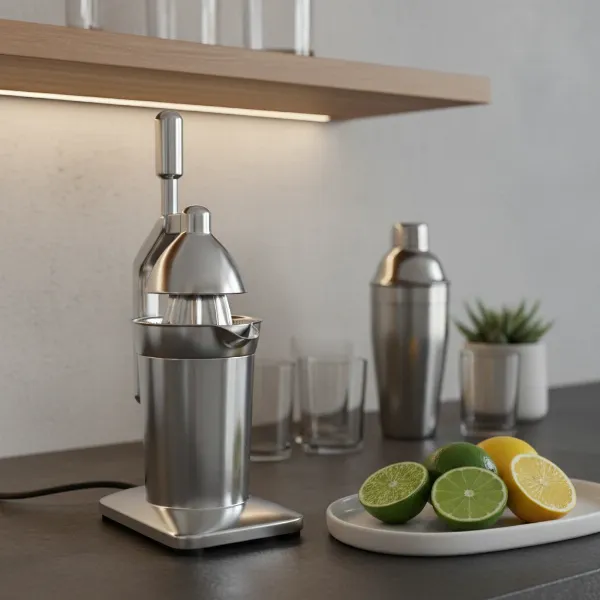 A sleek, compact manual citrus juicer on a stylish home bar setup, ready for cocktail making
For High-Volume & Professional Bars
When continuous, high-volume juicing is required, these machines deliver.
- Zulay Professional Heavy Duty Citrus Juicer: This commercial-grade manual lever press is a powerhouse. Its cast-iron body and robust design ensure exceptional durability and consistent, high-yield juice extraction. It’s built for serious juicing, capable of handling large quantities of all citrus types with ease and minimal effort once the fruit is loaded.
- Breville Citrus Press Pro (Bcp600sil): For the ultimate in electric juicing performance, the Breville Citrus Press Pro is a top contender. Its powerful motor and articulated juicing arm make quick work of any citrus fruit, delivering maximum juice with excellent pulp control and minimal noise. It’s a significant investment but pays off in speed, efficiency, and consistent quality for busy bars.
- Smeg Citrus Juicer: If aesthetics and performance are equally important, the Smeg juicer stands out. This electric pressure-activated model combines a stylish retro design with effective juicing capabilities. It’s great for medium-volume bars or home bars where it will be a prominent fixture, offering effortless juicing and easy cleaning.
Budget-Friendly Option
- Black+Decker 32oz Citrus Juicer (CJ625): Offering excellent value, this electric pressure-activated juicer provides hands-free operation and a generous 32-ounce capacity for collecting juice. It’s a reliable workhorse for its price point, capable of handling small to medium batches of various citrus fruits with good efficiency, making it an ideal choice for budget-conscious home bartenders or small establishments.
Tips for Maximizing Your Citrus Juicer’s Performance and Longevity
Even the best juicer performs better with proper technique and care.
- Proper Juicing Techniques:
- Warm Your Fruit: Gently roll citrus on a countertop before cutting to break down internal membranes, increasing juice yield.
- Cut Correctly: Always cut citrus fruits in half across the middle, not lengthwise, to expose the maximum amount of pulp to the reamer or press.
- Press Firmly, Not Aggressively: With manual juicers, firm, steady pressure is more effective than sudden, aggressive squeezing, which can introduce bitter pith. For electric reamers, a firm but not crushing pressure is best.
- Regular Cleaning and Maintenance:
- Clean Immediately: Rinse all juicer components immediately after use. Citrus juices are acidic and can cause sticky residue or corrosion if left to dry.
- Disassemble and Wash: For electric models, disassemble all removable parts (reamer, strainer, pitcher) and wash them according to manufacturer instructions. Many are dishwasher safe.
- Wipe Down Base: For electric juicers, wipe the motor base with a damp cloth; never immerse it in water.
- Storage Best Practices:
- Keep Accessible: If you use it daily, store your juicer on the countertop for easy access.
- Protect from Dust: For less frequent use, store components in a cabinet or use a cover to keep them dust-free.
- Dry Thoroughly: Ensure all parts are completely dry before storing to prevent mold or odors.
- Troubleshooting Common Issues:
- Low Yield: If your juicer isn’t extracting enough juice, try warming and rolling the fruit first. Also, ensure you are using the correct reamer size for the fruit.
- Bitter Juice: This is usually caused by pressing too hard and grinding the pith. Adjust your pressure or technique.
- Machine Jams/Strains: For electric models, ensure the fruit is properly centered and not too large for the reamer. Do not force the machine if it’s straining.
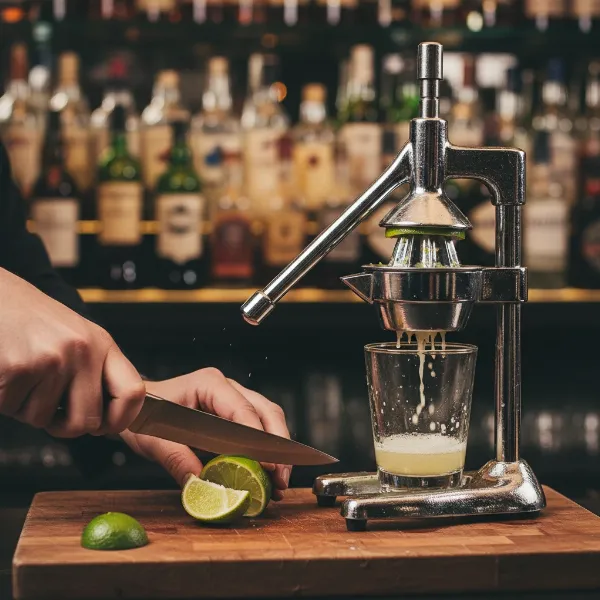 A professional bartender demonstrating correct citrus juicing technique with a manual lever press juicer in a well-lit bar setting.
Where to Buy Your Ideal Citrus Juicer
Once you’ve identified the best citrus juicer for your needs, knowing where to purchase it is the next step.
- Online Retailers: Major online platforms like Amazon, Williams Sonoma, Sur La Table, Target, and Crate & Barrel offer a vast selection of both manual and electric citrus juicers from various brands. They often provide competitive pricing, user reviews, and convenient home delivery.
- Specialty Kitchenware Stores: Local kitchen supply stores or larger culinary retailers often carry a curated selection of higher-quality juicers. Shopping here allows you to see the product in person and get advice from sales associates.
- Restaurant Supply Stores: For commercial-grade electric or heavy-duty manual lever presses, restaurant supply stores (either physical or online) are excellent sources. They cater specifically to professional needs and often offer more robust models.
- Consider Warranties and Return Policies: Regardless of where you buy, always check the manufacturer’s warranty and the retailer’s return policy. This provides peace of mind, especially for larger investments.
Conclusion
Whether you’re a home cocktail enthusiast aiming to perfect your craft or a professional bartender managing a busy bar, the impact of fresh, high-quality citrus juice cannot be overstated. From the simple elegance of a handheld press to the formidable power of a commercial electric juicer, the perfect tool is out there to elevate your liquid creations. By considering your volume needs, desired effort, and commitment to juice quality, you can confidently select a citrus juicer that will become an indispensable part of your bar. Invest wisely, juice freshly, and watch your cocktails transform from good to absolutely extraordinary.
What’s your go-to citrus juice for your favorite cocktail, and how has the right juicer changed your game?
Frequently Asked Questions
What is the primary difference between a reamer and a citrus press?
A reamer is a simple, cone-shaped tool you twist into cut citrus to extract juice, requiring significant manual effort and often resulting in pulp and seeds. A citrus press (manual or electric) uses leverage or power to squeeze juice from fruit halves, offering greater efficiency, higher yield, and better pulp control for cleaner juice.
Can I use an electric citrus juicer for small batches of cocktails?
Yes, electric citrus juicers can certainly be used for small batches, offering convenience and minimal effort. However, for just one or two cocktails, a compact manual handheld press might be quicker to set up and clean. Electric models truly shine when you need juice for multiple drinks or an entire party.
How can I prevent my citrus juice from tasting bitter?
Bitter juice is typically caused by over-extracting the pith, the white spongy layer between the peel and the fruit. To avoid this, use a juicer that presses the fruit efficiently without grinding too deep, or adjust your pressure with manual models. Also, ensure your fruit is ripe and store-bought citrus is fresh.
Are manual juicers truly effective for busy bars?
For truly high-volume, continuous operation in a busy professional bar, an electric lever press juicer is generally more effective and less labor-intensive than a manual one. However, a heavy-duty manual lever press can be very effective for medium-volume bars or stations, especially when durability and no-power operation are priorities.
How often should I clean my citrus juicer?
You should clean your citrus juicer immediately after every use. Citrus juice is acidic and sticky, and if left to dry, it can create stubborn residue, foster bacterial growth, and potentially corrode parts over time. Prompt rinsing and washing of all removable components ensure hygiene and prolong the life of your juicer.