Key limes, with their distinct aromatic zest and vibrant tartness, are the secret ingredient to many beloved desserts and beverages, most notably the iconic Key lime pie. However, their diminutive size often presents a significant challenge: how do you extract every precious drop of juice without a struggle? While standard citrus presses are often too large for these tiny fruits, a few clever techniques and the right tools can transform juicing key limes from a frustrating task into an efficient art. This comprehensive guide will reveal the best methods, essential tools, and expert tips to ensure you get the maximum yield from every tiny lime.
The Unique Challenge of Key Limes
Key limes (Citrus aurantifolia), also known as Mexican or West Indian limes, are considerably smaller than their Persian lime cousins, typically only about an inch or two in diameter. Their thin, smooth skin and numerous small seeds, coupled with a slightly firmer pulp, make them tricky to handle with conventional juicing equipment designed for larger citrus. Attempting to use an oversized reamer or press can result in wasted juice, a messy kitchen, and a lot of frustration. Understanding these unique characteristics is the first step toward mastering the art of key lime juicing.
Preparing Key Limes for Maximum Juice Extraction
Before you even think about squeezing, a little preparation can significantly increase your juice yield. These simple steps soften the limes, making them more pliable and easier to extract their liquid gold.
Warming and Rolling
Table is empty.One of the most effective pre-juicing techniques is to warm your key limes slightly and roll them on a hard surface. Gently rolling each lime back and forth with firm pressure against your kitchen counter helps break down the internal membranes that hold the juice. This process loosens the pulp, allowing more juice to flow freely when squeezed.
Microwaving for Softness
For an even greater boost in juice extraction, consider a quick trip to the microwave. Heating key limes for about 15-30 seconds on high can dramatically soften the rind and pulp, making them incredibly cooperative for juicing. This is especially helpful if your limes feel particularly firm or are straight from the refrigerator.
Top Methods and Tools for Juicing Key Limes
While their size can be a hurdle, several ingenious methods and tools are perfectly suited for extracting juice from key limes. Forget your oversized lemon press; precision is key here.
The Garlic Press Hack
Perhaps the most surprising, yet incredibly effective, method for juicing key limes involves a common kitchen utensil: the garlic press. Due to their compact size, half a key lime fits perfectly into the press’s chamber. Simply cut your key lime in half, place one half (cut-side down) into a clean garlic press, and squeeze firmly over a bowl or cup. The press effectively extracts the juice, leaving the pulp and seeds behind, making it a surprisingly efficient and mess-free solution.
Small Handheld Citrus Squeezers
Many manufacturers offer handheld citrus squeezers specifically designed for lemons and limes, often with smaller cups that can accommodate key limes. These manual presses typically feature a hinge mechanism and are made from durable metal or sturdy plastic. To use, cut your key lime in half, place one half (cut-side down) into the designated cup, and press the handles together. Look for models with a smaller receptacle to ensure a snug fit for key limes.
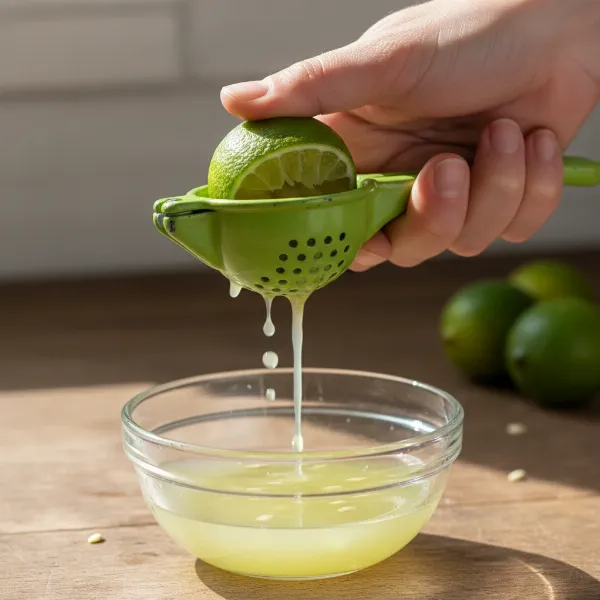 A hand holding a small green handheld citrus squeezer with a cut key lime inside, pressing juice into a glass bowl.
Manual Citrus Reamers
A traditional manual citrus reamer, either wooden, plastic, or glass, can also be effective for key limes, provided it’s appropriately sized. While many reamers are designed for larger citrus, smaller versions or those with a tapered point can work well. Slice your key lime in half, hold it firmly over a bowl, and twist the reamer into the pulp, applying steady pressure. Be mindful of seeds, as most reamers don’t have built-in strainers, so you’ll need to strain the juice afterward.
The Fork Method
When specialized tools aren’t available, a simple fork can be your best friend. This method is a fantastic last-minute hack for getting juice from key limes. After slicing a key lime in half, hold one half firmly in your hand (or use tongs for better grip) over a bowl. Stick the tines of a fork into the pulp and twist and squeeze the lime with your hand while rotating the fork. The fork helps break up the pulp and release more juice. Remember to strain the juice to remove any seeds or pulp.
Maximizing Your Key Lime Juice Yield: Expert Tips
Beyond the tools and basic methods, these additional tips can help you squeeze every last drop of flavorful juice from your tiny key limes.
- Cut Limes Correctly: Always cut key limes in half across their equator. This exposes the most pulp and makes it easier for most juicing tools to extract juice.
- Strain for Purity: Key limes are notorious for their numerous small seeds and fine pulp. Always strain your freshly squeezed juice through a fine-mesh sieve to ensure a smooth, seed-free result, especially crucial for delicate recipes like Key lime pie.
- Gentle Pressure: While you want to extract as much juice as possible, avoid overly aggressive squeezing, particularly with handheld presses. Excessive pressure can release bitter oils from the rind, which can affect the taste of your juice. Aim for firm, steady pressure.
Key Limes vs. Regular Limes: Juicing Considerations
The differences between key limes and regular (Persian) limes extend beyond size. Key limes typically offer a more intense, floral, and aromatic tartness compared to the bolder, sometimes slightly less nuanced, acidity of Persian limes. This distinct flavor profile is why specific recipes call for key limes. Because of their smaller size and thinner skin, key limes require a more delicate approach and smaller tools, whereas Persian limes can handle larger, more robust juicers.
Choosing the Right Key Lime Juicing Tool
Selecting the best tool depends on your specific needs and how often you’ll be juicing.
- For Occasional Use or Small Batches: A garlic press or the fork method is perfect. They are readily available and require minimal investment.
- For Regular Use or Medium Batches: A dedicated small handheld citrus squeezer is an excellent choice. It’s efficient, relatively inexpensive, and easy to clean.
- For Larger Batches or Frequent Bakers: While a specialized electric juicer can be used if it has a very small reaming cone, manual methods often prove more efficient and less cumbersome for the tiny size of key limes.
Maintaining Your Key Lime Juicing Tools
Proper care ensures your tools last and remain hygienic. For manual squeezers and reamers, simply rinse them thoroughly after each use with warm, soapy water. Most are dishwasher-safe, but hand washing preserves their finish. Store them in a dry place to prevent rust (for metal tools) or mold (for wooden reamers).
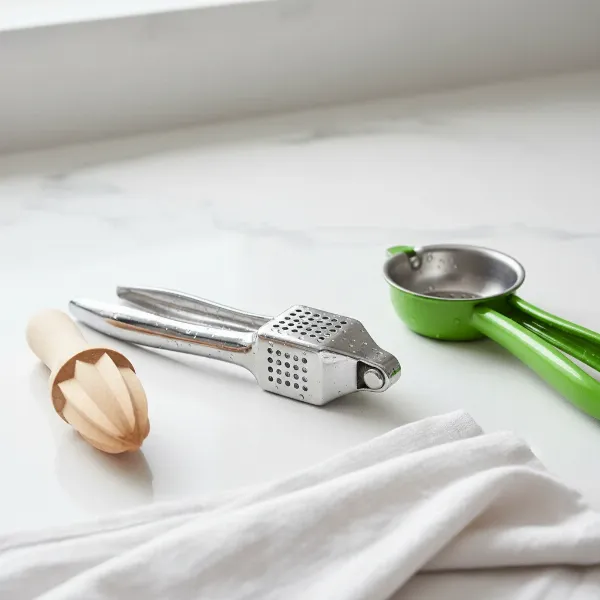 Clean juicing tools, including a garlic press, handheld squeezer, and reamer, laid out on a clean kitchen counter after use.
Conclusion
Juicing key limes, while initially daunting due to their small stature, is an easily conquerable task with the right approach. By employing simple preparation techniques like rolling and microwaving, and utilizing effective tools such as the humble garlic press, a small handheld squeezer, or even just a fork, you can efficiently extract every drop of their distinctive, tangy juice. No longer will you dread making that perfect Key lime pie or a refreshing key limeade. Embrace these methods, and unlock the full potential of these tiny but mighty citrus gems. What will you create with your freshly squeezed key lime juice?
Frequently Asked Questions
How much juice can you get from one key lime?
Typically, one key lime yields about 1 to 2 tablespoons (15-30 ml) of juice, although this can vary depending on the size and ripeness of the fruit, and the juicing method used.
Can I use a regular electric juicer for key limes?
Most standard electric citrus juicers have reaming cones designed for larger fruits like oranges or lemons, making them inefficient for key limes. Unless your electric juicer comes with a very small cone attachment specifically for limes, manual methods are generally more effective.
What’s the best way to store key lime juice?
Freshly squeezed key lime juice can be stored in an airtight container in the refrigerator for up to 3-5 days. For longer storage, you can freeze the juice in ice cube trays, then transfer the frozen cubes to a freezer-safe bag for up to 3-4 months.
How do I prevent bitterness when juicing key limes?
To avoid bitterness, use firm but gentle pressure when juicing, especially with presses. Over-squeezing or pressing too hard on the rind can release bitter oils. Also, ensure your limes are ripe.
How can I easily remove seeds from key lime juice?
The easiest way to remove the numerous small seeds and fine pulp from key lime juice is to pour the freshly squeezed juice through a fine-mesh sieve. You can also line the sieve with cheesecloth for extra clarity.