There’s nothing quite like the invigorating taste of freshly squeezed citrus juice. From a bright morning orange juice to a zesty lemon kick in your evening cocktail, citrus brings a burst of freshness. But as you navigate the world of juicers, a fundamental question emerges: how much power do you truly need, and does it differ for home kitchens versus bustling commercial environments? Choosing the right citrus juicer goes beyond just squeezing fruit; it’s about understanding the demands of your usage, the engineering behind the machines, and ultimately, ensuring you get the perfect pour every time.
Understanding the Core Difference: Usage and Demands
The distinction between home and commercial citrus juicers begins with their intended use. These machines are engineered for vastly different levels of activity and durability.
Home Citrus Juicers: Convenience for the Casual Juicer
Home citrus juicers are crafted for personal enjoyment and occasional use. Perhaps you make a glass of orange juice for breakfast a few times a week, or need a fresh squeeze of lemon for a recipe. These models prioritize:
- Compactness: Designed to fit neatly on kitchen countertops without consuming excessive space.
- Ease of Cleaning: Typically feature fewer parts and simpler mechanisms for quick, hassle-free cleanup after light use.
- Quiet Operation: Often engineered to operate with minimal noise, suitable for a home environment where peace is valued.
- Affordability: Generally come with a lower price tag, making them accessible for everyday consumers.
While perfectly adequate for light tasks, their construction and motor capabilities are not built for continuous, high-volume operation.
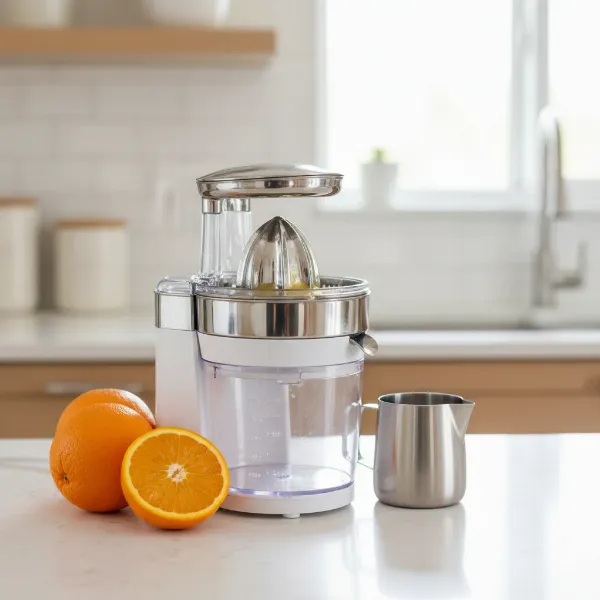 A compact electric home citrus juicer on a kitchen counter, ready for personal use.
Commercial Citrus Juicers: Built for the Grind
In stark contrast, commercial citrus juicers are robust workhorses designed to meet the rigorous demands of juice bars, cafes, restaurants, and hotels. These environments require machines that can deliver consistent, high-quality juice for extended periods without faltering. Their design emphasizes:
- Durability: Constructed with heavy-duty materials to withstand constant use and the wear and tear of a busy kitchen.
- Speed and Efficiency: Capable of processing large quantities of fruit rapidly to keep up with customer demand during peak hours.
- High Output: Engineered for continuous juicing, minimizing downtime for emptying pulp or refilling fruit.
- Consistency: Designed to extract juice uniformly, ensuring every glass meets a high standard of taste and quality.
For businesses, a commercial juicer is an essential investment that directly impacts operational efficiency and customer satisfaction. Attempting to use a home juicer in such a setting would quickly lead to breakdowns, poor performance, and potential safety hazards.
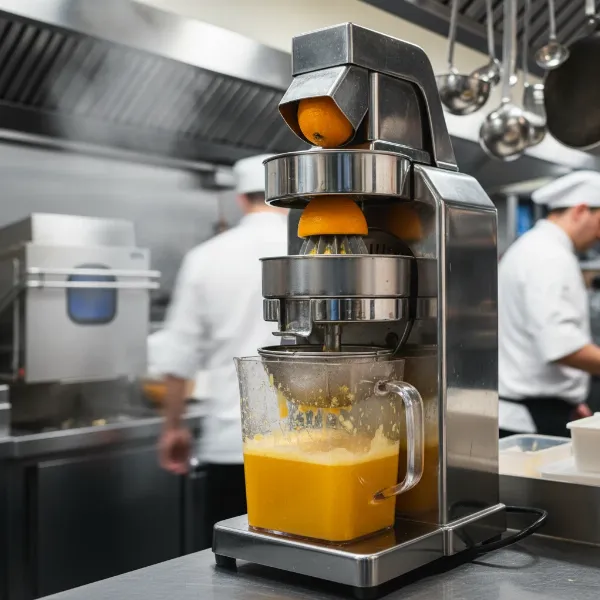 A robust stainless steel commercial citrus juicer in a busy cafe setting, designed for high volume.
Power Play: How Much Wattage Do You Really Need?
The “power” in a citrus juicer primarily refers to its motor wattage, which directly influences its speed, efficiency, and ability to handle varying loads.
Power for Home Use
For the average home user, a citrus juicer with a motor in the range of 40 to 400 watts is typically sufficient.
- Occasional Use: These wattages provide ample power to extract juice from a few oranges or lemons without straining the motor.
- Energy Efficiency: Lower wattage often translates to less energy consumption, which is ideal for infrequent use.
- Noise Levels: Home models are generally designed for quieter operation, a welcome feature in a residential kitchen.
Some highly efficient manual or low-wattage electric reamers are perfect for personal use, focusing on ease and accessibility rather than raw power.
Power for Commercial Use
In a commercial setting, power becomes a non-negotiable requirement. High-volume juicing demands robust motors to maintain performance and longevity.
- High-Powered Motors: Commercial citrus juicers typically feature motors ranging from 500 watts to 1000 watts, and sometimes even higher for industrial models.
- Continuous Operation: This higher wattage is essential to prevent overheating when the machine runs for hours on end, processing hundreds of fruits.
- Consistent Extraction: A powerful motor ensures efficient and consistent juice extraction, even with tougher or larger citrus varieties, maintaining a high yield.
- Speed: Fast processing speed is crucial for businesses, allowing them to serve customers quickly and efficiently. Some commercial units can juice 17-22 oranges per minute.
For businesses, skimping on motor power can lead to frequent breakdowns, slower service, and ultimately, lost revenue.
Beyond Power: Key Differentiators
While motor power is a critical distinction, several other factors set home and commercial citrus juicers apart.
Durability and Build Quality
- Commercial Models: These are built like tanks. They feature heavy-duty components made from industrial-grade materials such as stainless steel or cast aluminum. This robust construction ensures they can endure constant use, resist corrosion from acidic citrus, and provide a long operational lifespan.
- Home Models: Durability is still a consideration, but the focus is often on a balance of longevity and aesthetics. Materials might include durable plastics, lighter metals, or a combination, suitable for less frequent handling and cleaning.
Capacity and Speed
- Commercial Models: Designed for high throughput, commercial juicers boast large juice containers, spacious pulp bins, and sometimes automated feeding mechanisms. Their processing speed is paramount, allowing them to quickly fulfill numerous orders.
- Home Models: Feature smaller juice receptacles and pulp collectors, suitable for one to a few servings. The process is typically more hands-on and slower, as volume isn’t the primary concern.
Efficiency and Juice Quality
- Commercial Models: Advanced commercial juicers are designed to optimize juice extraction, minimizing the presence of bitter peel oils and maximizing yield from each fruit. This results in a superior-tasting, consistently high-quality product that customers expect from a professional establishment. Some systems use an “Up & Down Soft Cut System” to reduce tearing and peel oil content.
- Home Models: Manual or basic electric reamers are generally effective, but over-pressing with some manual models can sometimes lead to more bitter-tasting juice if too much pith oil is extracted.
Ease of Cleaning and Maintenance
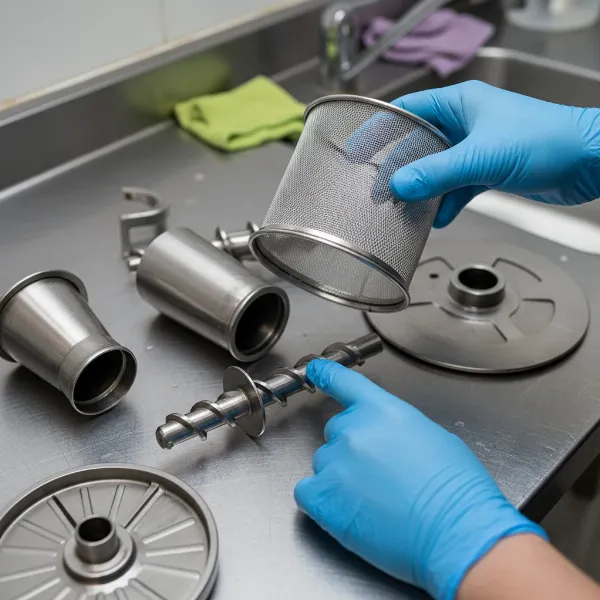
- Commercial Models: While they may have more parts due to their complexity and size, commercial juicers are designed for easy disassembly and cleaning to meet stringent hygiene standards. Quick daily cleaning routines are often possible, alongside deeper sanitization.
- Home Models: Simpler designs often mean fewer parts to clean, making daily maintenance straightforward. Many removable parts are dishwasher-safe.
Cost and Return on Investment (ROI)
- Commercial Models: The initial investment for a commercial citrus juicer is significantly higher. However, for businesses, this cost is justified by the long-term savings from buying whole fruit in bulk, reducing waste, and increasing profitability by offering fresh, premium juice. It’s also crucial to note that using a home appliance in a commercial setting can void insurance policies, making a dedicated commercial model a legal and financial necessity.
- Home Models: More budget-friendly, reflecting their lighter build and intended occasional use. The value is in convenience and fresh juice on demand without a large upfront expense.
Types of Citrus Juicers
Understanding the basic types can further clarify your power needs:
- Manual Citrus Juicers: These include handheld squeezers and countertop presses. They require no electricity and are ideal for small quantities. While effective, they can be labor-intensive for more than a few fruits. Handheld reamers also fall into this category, best for quick single servings.
- Electric Citrus Reamers: Common for home use, these feature a motorized reamer that spins when pressure is applied. They automate the rotation, saving effort for moderate batches. Their wattage is generally low (e.g., 30-160W).
- Commercial Automatic Citrus Juicers: These are high-end machines, often semi or fully automatic, designed to process large volumes of citrus with minimal human intervention. They typically feature powerful motors, durable components, and efficient extraction systems.
Choosing Your Perfect Citrus Juicer
The decision boils down to your specific needs and environment.
For Home Use:
If you’re making fresh juice for yourself or your family a few times a week, a compact electric citrus juicer with a wattage of 40-200W or a sturdy manual press will serve you well. Prioritize ease of cleaning, a suitable capacity for your needs, and a design that fits your kitchen space. You don’t need excessive power for this usage.
For Commercial Use:
If you operate a business where fresh citrus juice is a regular offering, a dedicated commercial citrus juicer is indispensable. Focus on models with powerful motors (500W+), robust construction (stainless steel, cast aluminum), high processing speed, and large capacities to handle continuous demand. The initial investment is significant, but the long-term benefits in efficiency, durability, and product quality far outweigh the cost of an underpowered or unsuitable machine. Remember, a commercial juicer is an investment in your business’s reputation and profitability.
Ultimately, “power” in a citrus juicer is relative. It’s not about having the most watts, but having enough watts—and the right accompanying features—to match your juicing frequency, volume, and quality expectations.
Frequently Asked Questions
What is the ideal wattage for a home citrus juicer?
For home use, an electric citrus juicer typically requires a motor between 40 and 400 watts. This range is sufficient for occasional juicing, offering a balance of efficiency, quiet operation, and energy consumption suitable for a residential kitchen.
Why can’t I use a home juicer in a commercial setting?
Home juicers are not designed for the continuous, high-volume operation required in commercial environments. They lack the robust motor power, durable construction, and capacity to withstand constant use, leading to frequent breakdowns, inefficient output, and potential safety concerns. Furthermore, using a home appliance for commercial purposes may void its warranty and could impact your business insurance coverage.
Do commercial citrus juicers produce better-tasting juice?
Commercial citrus juicers are engineered for optimal extraction, often incorporating features that minimize bitter peel oil and maximize juice yield while preserving flavor. This results in a consistently high-quality, pure-tasting juice that can be superior to juice produced by less efficient home models or over-pressed manual methods.
Are manual citrus juicers suitable for daily use?
Manual citrus juicers are excellent for small quantities and occasional use, offering simplicity and no power consumption. However, for daily, high-volume juicing, they can be labor-intensive and tiring. An electric juicer or a heavy-duty manual press designed for leverage would be a more practical choice for frequent use.
How often should I clean my citrus juicer?
Regardless of whether it’s a home or commercial model, you should clean your Citrus Juicer immediately after each use. This prevents pulp and juice residue from drying and hardening, making cleanup easier and maintaining hygiene. For commercial machines, thorough daily cleaning and regular deep sanitization are essential to meet health and safety standards.