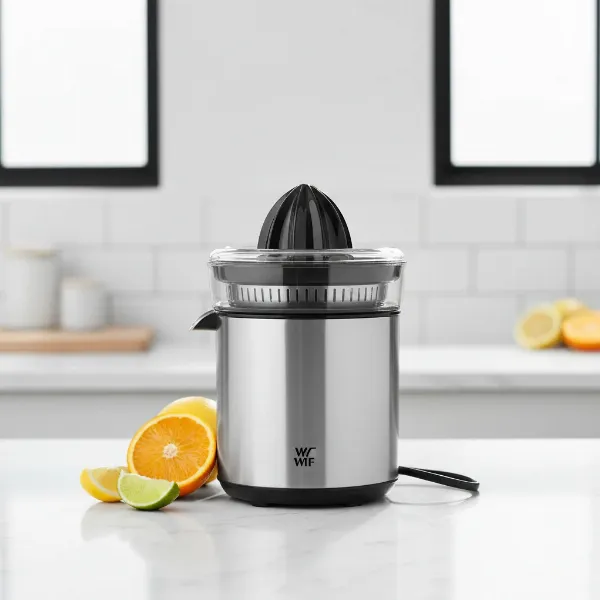
There’s nothing quite like a refreshing glass of freshly squeezed orange or grapefruit juice to kickstart your day or provide a vibrant boost. Electric citrus juicers make this delightful experience effortless, quickly transforming whole fruits into delicious beverages. However, the true secret to consistent, high-quality juice and a long-lasting appliance lies in one often-overlooked component: the pulp filter. If you’ve ever noticed your juicer slowing down, producing less juice, or even developing an unwelcome aroma, a clogged or dirty pulp filter is almost certainly the culprit. Learning how to effectively clean this vital part isn’t just about hygiene; it’s about preserving the efficiency, flavor, and lifespan of your beloved juicer. This comprehensive guide will walk you through every step, from daily maintenance to tackling stubborn buildup, ensuring your electric citrus juicer always performs its best.
Understanding Your Electric Citrus Juicer’s Pulp Filter
Table is empty.Before diving into the nitty-gritty of cleaning, let’s briefly understand the role of your electric citrus juicer’s pulp filter. Also known as the strainer or mesh screen, this component is designed to separate the liquid juice from the solid pulp and seeds as the fruit is pressed. Its fine mesh holes are crucial for producing smooth, pulp-free juice.
Over time, these tiny perforations can become clogged with fruit fibers, seeds, and mineral deposits from water. When the filter becomes obstructed, it directly impacts your juicer’s performance. You might notice the motor straining more, a significant reduction in juice yield, or even a less vibrant flavor profile due to trapped, decaying pulp. Neglecting the filter can also lead to bacterial growth, unpleasant odors, and, in severe cases, can shorten the overall lifespan of your appliance by forcing the motor to work harder than intended. Regular, thorough cleaning isn’t just a chore; it’s an investment in your health and your juicer’s longevity.
Essential Tools for a Sparkling Clean Filter
Having the right tools at hand makes the cleaning process much more efficient and effective. You don’t need an arsenal of specialized gadgets; often, common household items are perfect for the job. Gathering these before you start will streamline your cleaning routine and help you achieve the best results.
First and foremost, a soft-bristle cleaning brush is indispensable. Many juicers come with a dedicated brush, but a good quality dish brush with soft nylon bristles or even an old toothbrush can work wonders. These brushes are gentle enough not to scratch delicate mesh but firm enough to dislodge stubborn pulp from the tiny holes. For particularly fine mesh or hard-to-reach crevices, a pip cleaner or a thin, stiff brush can be incredibly useful.
Next, you’ll need suitable cleaning agents. Mild dish soap mixed with warm water is your everyday hero, effective at cutting through citrus oils and residue. For more stubborn buildup and mineral deposits, white vinegar is a natural acidic powerhouse. A 1:1 mixture with warm water is a popular and effective solution for soaking parts. Similarly, lemon juice can be used as a natural alternative to vinegar due to its citric acid content, which helps break down mineral scaling. Baking soda is another versatile agent; its mild abrasive quality makes it excellent for scrubbing away stuck-on particles without damaging surfaces, and it’s also great for odor neutralization. Finally, ensure you have a soft cloth or microfiber towel for drying and a damp cloth for wiping down the motor base.
“A clean pulp filter is the unsung hero of a great juicing experience. Without it, your juicer can’t deliver the clarity and efficiency it was designed for.”
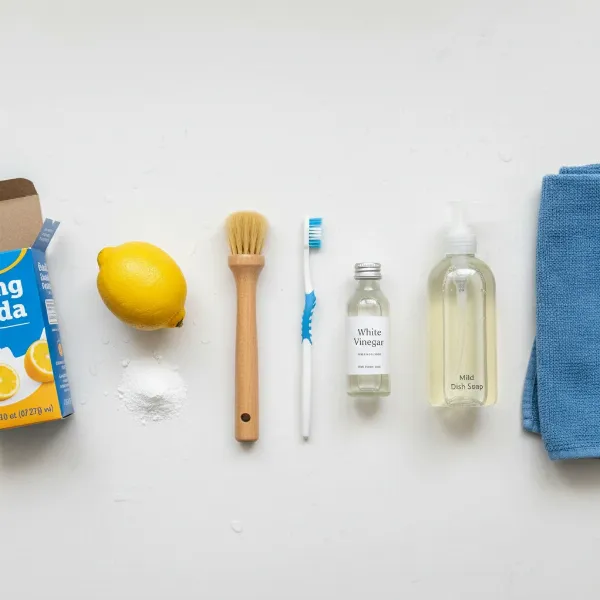 Essential tools for cleaning an electric citrus juicer pulp filter including brushes and natural cleaning agents
Step-by-Step Guide: Cleaning Your Electric Citrus Juicer Pulp Filter
Regular cleaning of your electric citrus juicer’s pulp filter is a quick and straightforward process if done immediately after each use. Don’t let pulp dry and harden; that’s when the real challenge begins. Follow these steps for an optimal clean.
1. Unplug and Disassemble Safely:
Safety first! Always unplug your electric citrus juicer from the power outlet before you begin any cleaning. Once unplugged, carefully disassemble all removable parts. This typically includes the juicing cone, the pulp filter (strainer/mesh basket), the juice collector, and the pulp container. Consult your juicer’s user manual if you’re unsure how to take it apart. This step is crucial for accessing all areas where pulp can hide and for preventing water from reaching the motor base.
2. Initial Rinse to Remove Loose Pulp:
Immediately after disassembling, take all the removable parts to the sink. Rinse each piece under warm, running water. Pay particular attention to the pulp filter, as it will likely have the most significant amount of loose pulp and fibers. A good initial rinse will dislodge most of the easily removable residue, making the scrubbing phase much simpler and preventing pulp from drying and sticking to the mesh. You can gently tap the filter against the side of the sink to help dislodge stubborn pieces.
3. Scrubbing the Pulp Filter Thoroughly:
This is the most critical step for the pulp filter. Use your soft-bristle cleaning brush or an old toothbrush. Apply a small amount of mild dish soap to the brush and gently scrub the entire surface of the mesh filter, both inside and out. Focus on the tiny holes where pulp tends to accumulate. Hold the filter up to a light source as you scrub; this allows you to spot any remaining clogged holes. If you see any blockages, continue scrubbing until the water flows freely through all parts of the mesh. Avoid using metal scourers or abrasive pads, as these can damage the fine mesh and reduce its effectiveness over time.
4. Washing Other Components:
While the pulp filter demands the most attention, don’t neglect the other parts. Use warm soapy water and a sponge or soft brush to clean the juicing cone, juice collector, and pulp container. Rinse them thoroughly to remove all soap residue. Some components might be dishwasher-safe, but always check your juicer’s manual before placing them in the dishwasher, especially plastic parts which can sometimes warp from high heat. Hand washing often provides a more meticulous clean for juicer parts.
5. Final Rinse and Inspection:
After scrubbing all components, give them a final, thorough rinse under clean, running water. This ensures all soap, loosened pulp, and cleaning solution are completely removed. For the pulp filter, hold it up to a light one last time to confirm that every mesh hole is clear. Water should pass through uniformly.
6. Drying and Reassembly:
Allow all cleaned parts to air dry completely before reassembling your juicer. Placing them on a clean dish rack or a microfiber towel works well. Leaving moisture on the components can lead to unpleasant odors, bacterial growth, and even mold. If you’re in a hurry, you can hand-dry the parts with a clean, lint-free cloth, paying special attention to the mesh filter to prevent water spots and mineral deposits from forming in the tiny holes. Once everything is thoroughly dry, carefully reassemble your electric citrus juicer according to your manual’s instructions.
Deep Cleaning and Stubborn Stains: Beyond the Basics
Sometimes, despite your best efforts at daily cleaning, stubborn pulp, mineral deposits, or discoloration can build up on your electric citrus juicer’s pulp filter. When this happens, a more intensive deep cleaning method is required. These techniques are particularly effective for restoring your filter’s pristine condition and ensuring optimal performance.
Soaking for Persistent Pulp and Mineral Deposits:
Soaking is your best friend when faced with dried, caked-on pulp or hard water stains. A highly effective solution is a mixture of equal parts white vinegar and warm water. Submerge your pulp filter and any other affected removable parts in this solution for about 15-30 minutes for moderate buildup, or even overnight for severe cases. The acidity of the vinegar works to dissolve mineral deposits and loosen organic material, making it much easier to scrub away. For plastic parts prone to discoloration or odor absorption, a 10% lemon juice or white vinegar solution soaked overnight can be particularly beneficial.
After soaking, use your cleaning brush to scrub the filter again. You’ll find that the previously stubborn grime comes off much more easily. Rinse thoroughly with clean water afterward to remove any vinegar smell.
Baking Soda for Gentle Abrasive Cleaning and Odor Removal:
If you encounter tough stains or persistent odors, baking soda can be a powerful natural ally. After an initial rinse, sprinkle some baking soda directly onto your damp pulp filter. Using a cleaning brush, gently scrub the filter, allowing the mild abrasive nature of the baking soda to help lift the stains and trapped particles. Baking soda is also excellent at neutralizing odors. For an extra boost, you can create a paste with baking soda and a little water, apply it to the affected areas, let it sit for a few minutes, then scrub and rinse.
Addressing Discoloration:
Over time, especially with certain fruits, plastic components of your juicer, including parts of the filter housing, may start to discolor. While this doesn’t usually affect performance, it can be aesthetically unpleasing. Regular soaking in a vinegar or lemon juice solution, as mentioned above, can help mitigate this. For tough stains on plastic, a mixture of baking soda and vinegar can be applied (it will fizz!) and then scrubbed off after a few minutes. Always ensure you rinse thoroughly after using any cleaning agents.
Using Citric Acid for Serious Mineral Buildup:
For extremely stubborn mineral deposits, particularly from hard water, food-grade citric acid can be a more potent solution than vinegar. You can purchase citric acid powder online or in some grocery stores. To use, dissolve a few tablespoons of citric acid in warm water in a basin. Submerge your juicer parts, especially the filter, and let them soak for several hours or overnight. This strong acidic solution is highly effective at breaking down limescale and mineral buildup. Always follow up with thorough scrubbing and rinsing.
Preventative Measures: Keeping Your Filter Clean Longer
Prevention is always better than cure, and this holds true for maintaining your electric citrus juicer’s pulp filter. By adopting a few simple habits, you can significantly reduce the frequency and intensity of deep cleaning required, keeping your juicer performing optimally with less effort.
Clean Immediately After Use:
This is, without a doubt, the single most important tip. Pulp and juice residue begin to dry and harden almost instantly, making them incredibly difficult to remove once set. Rinsing your juicer’s components, especially the filter, under warm running water immediately after juicing will remove the vast majority of pulp before it has a chance to stick. If you absolutely cannot clean it right away, at least immerse the removable parts in a basin of warm, soapy water. This will prevent the residue from drying and make the eventual cleaning much easier.
Pre-Cut Fruits and Remove Seeds:
While citrus juicers are designed to handle seeds, removing larger seeds before juicing can reduce the amount of debris that needs to be filtered out, potentially keeping the mesh clearer for longer. Similarly, ensuring your fruits are properly cut can lead to more efficient juicing and less strain on the filter.
Dry Thoroughly to Prevent Mineral Deposits:
Even clean water contains minerals, and when left to air dry, these minerals can deposit in the tiny holes of your pulp filter, forming limescale over time. After cleaning, make it a habit to physically dry your pulp filter with a clean towel or microfiber cloth. Holding it up to the light to ensure all the mesh holes are clear before storage will go a long way in preventing future blockages. For those in hard water areas, this step is particularly crucial for maintaining clear filter performance.
Regular Quick Inspections:
Before and after each use, take a moment to quickly inspect your pulp filter. Hold it up to a light source. Are all the tiny holes clear? If you spot any minor blockages, a quick brush with a toothbrush can prevent them from becoming major problems later. Incorporating this brief check into your routine ensures you catch issues early.
When to Consider Replacing Your Pulp Filter?
While diligent cleaning can extend the life of your electric citrus juicer’s pulp filter considerably, these components are not designed to last forever. Over time, even with the best care, the fine mesh can wear down, become permanently clogged, or develop damage. Knowing when to replace your filter is crucial for maintaining your juicer’s efficiency and juice quality.
One of the primary indicators that your pulp filter might need replacing is if you notice persistent clogging even after thorough deep cleaning and soaking. If you find yourself consistently battling stubborn pulp that simply won’t dislodge, it might be a sign that the mesh has become too worn or compromised to effectively release the pulp.
Another clear sign is visible damage to the mesh. This could include tears, holes, or significant warping that prevents the filter from fitting properly or performing its function. Even small tears can allow excessive pulp into your juice, defeating the purpose of the filter.
Finally, a noticeable decrease in juicing efficiency or juice quality, despite a clean motor and proper assembly, could point to a failing filter. If your juicer strains more than usual or produces excessively pulpy juice, a new filter might be the solution. Most juicer manufacturers offer replacement parts, so check your model’s specifications and consider investing in a new filter to revitalize your juicing experience.
Conclusion
Mastering the art of cleaning your electric citrus juicer’s pulp filter is fundamental to enjoying fresh, clear, and delicious juice every time. By committing to immediate cleaning after each use, utilizing simple yet effective tools like brushes, dish soap, vinegar, and baking soda, and incorporating occasional deep cleaning, you can prevent stubborn buildup, eliminate odors, and extend the life of your appliance. Remember, a well-maintained filter isn’t just about hygiene; it directly impacts your juicer’s performance and the quality of your juice. By following these guidelines, you’ll ensure your electric citrus juicer remains a reliable and efficient partner in your journey towards a healthier lifestyle. What’s your favorite tip for keeping your juicer sparkling clean?