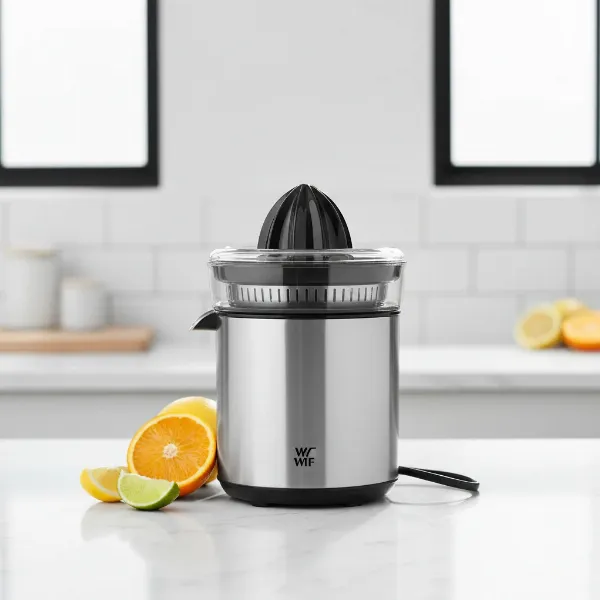
There’s nothing quite like the refreshing taste of freshly squeezed citrus juice to kickstart your day or provide a healthy boost. But what happens when you’re ready to extract that vibrant goodness, and your beloved citrus juicer remains stubbornly silent, refusing to power on? It’s a common frustration that can turn your morning routine into a head-scratching dilemma. Before you despair or consider a costly replacement, understand that many “dead” juicers simply need a little diagnostic attention. This comprehensive guide will walk you through systematic troubleshooting steps, empowering you to identify and often resolve why your citrus juicer isn’t turning on, ensuring you can get back to enjoying your favorite homemade beverages.
Initial Checks: The First Steps When Your Juicer is Lifeless
When your citrus juicer shows no signs of life, the most logical place to begin is with the simplest, most external factors. These initial checks can often resolve the problem quickly, saving you time and hassle.
Power Source & Cord Inspection: Is It Plugged In?
Table is empty.It might sound obvious, but a loose plug is a surprisingly common culprit. Ensure your juicer’s power cord is securely plugged into both the appliance and a functioning electrical outlet. Test the outlet by plugging in another small appliance, like a lamp or phone charger, to confirm it has power. If the outlet is dead, check your home’s circuit breaker or fuse box. Also, carefully inspect the entire length of the power cord for any visible signs of damage, fraying, or cuts. A compromised cord can prevent power from reaching the motor and should be replaced by a qualified professional for safety.
The Often-Overlooked Reset Button
Many modern citrus juicers, especially those designed for high-performance, include a reset button as a safety feature. This button, often small and located on the base or underside of the unit, is designed to trip and cut power if the motor experiences an overload or overheating. If your juicer suddenly stopped working or refused to start, pressing this button firmly for a few seconds might be all it takes to restore power. Allow the juicer to cool down completely before attempting to reset and restart it, especially if it was recently in use.
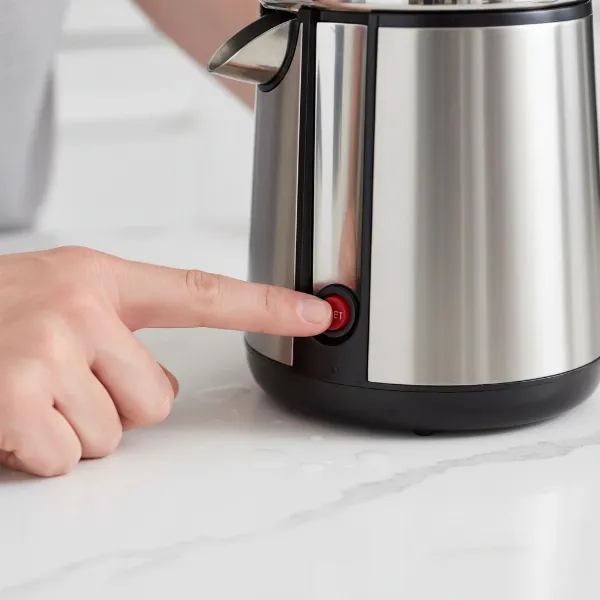 Person pressing the small reset button on the base of a citrus juicer to restore power.
Power Fluctuations and Outages
Sometimes, the issue isn’t with the juicer itself but with the electricity supply. A brief power outage, a brownout (a drop in voltage), or even a surge can cause sensitive electronics to temporarily shut down or prevent them from starting. If other appliances in your home are also experiencing issues, or if the lights flickered recently, waiting a few minutes for stable power to return and then trying the reset button might solve the problem. Using a surge protector can also safeguard your juicer from future electrical irregularities.
Assembly and Safety Features: Ensuring Everything is in Place
Citrus juicers are designed with safety as a top priority, often incorporating interlock systems that prevent operation unless all components are correctly assembled. This is a primary reason why a juicer might not turn on, even if it has power.
Proper Component Assembly: The Safety Interlock System
Your citrus juicer won’t operate if its parts aren’t assembled precisely. This common design feature, known as a safety interlock, ensures that cutting blades or spinning components are fully enclosed before the motor can engage. Double-check that the pulp container, juice pitcher, juicing screen, and particularly the lid are all securely locked into position. Many juicers have a locking arm or clamps that must be fully engaged to activate the safety switch. Disassemble and then carefully reassemble all parts, making sure each piece clicks or locks firmly into place according to your user manual.
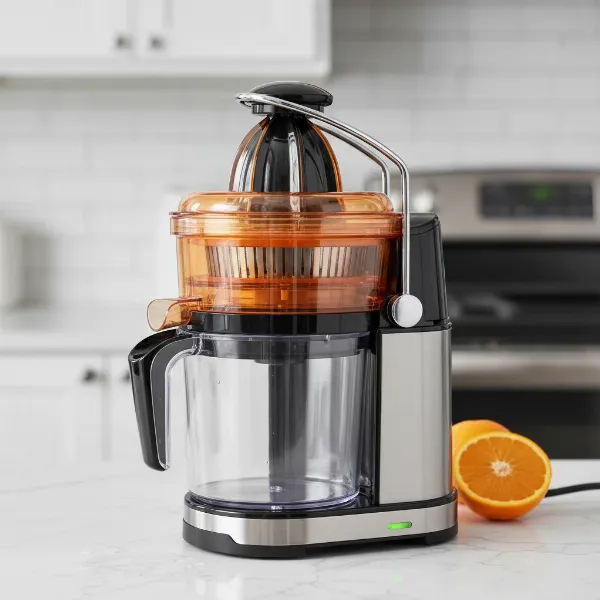 A fully and correctly assembled citrus juicer with all components locked, ready for operation.
Magnetic Sensors: A Hidden Cause in Vertical Juicers
Certain types of juicers, especially vertical slow masticating models often used for citrus, incorporate a magnetic safety sensor, typically located in the hopper or feed chute. This sensor detects if the hopper is correctly attached. A common cause of this sensor failing is damage to the small magnet within the hopper, frequently caused by exposure to high heat from a dishwasher. If you suspect this, try removing the hopper and, with the juicer turned on (but empty), hold a strong magnet near the sensor area. If the juicer motor briefly engages, it indicates the magnet in your hopper is damaged and likely needs replacement.
Overload Protection and Overheating
High-powered citrus juicers are often equipped with an overload protection mechanism designed to prevent motor damage. If you’ve been juicing for an extended period, or if you tried to process too much produce at once, the motor can overheat or become strained. This protection system will automatically shut off the juicer to prevent burnout. If your juicer feels hot to the touch, or if it suddenly stopped mid-operation, allow it to cool down completely for at least 30 minutes before attempting to restart it. Overloading the feed chute is a frequent cause of this, so always feed ingredients gradually.
Deeper Dive: When Internal Components Are the Culprit
If the external checks and safety feature confirmations don’t resolve the issue, the problem might lie deeper within the juicer’s internal workings. Addressing these issues often requires more caution or professional assistance.
Motor Jams and Debris Blockages
Even the most powerful citrus juicer can struggle if its internal components are obstructed. Pulp, seeds, or even small pieces of fruit can become lodged around the juicing screen, auger (in masticating juicers), or blade assembly (in centrifugal juicers). This blockage can prevent the motor from spinning, even if it’s receiving power, sometimes resulting in a humming sound without any movement. Completely disassemble and thoroughly clean all removable parts, paying special attention to the strainer and auger, to ensure no residue is impeding movement.
Examining the Power Switch and Internal Wiring
If the power switch feels loose, unresponsive, or sticky, it might be faulty. In some cases, the internal wiring connecting the switch to the motor might have become loose or damaged. For those with electrical repair experience, opening the juicer (always unplugged first!) to inspect these connections and the switch can reveal the issue. Look for burnt wires, loose terminals, or corrosion. Many juicers also contain small “micro-switches” that confirm components are correctly seated; if these are faulty, the juicer won’t start. However, for safety reasons, unless you are comfortable and experienced with electrical repairs, it is highly recommended to consult a professional for internal electrical inspections.
Blown Fuses or Circuit Board Issues
Internal fuses are safety components designed to protect the juicer’s motor and electronics from power surges. If your juicer was subjected to an electrical spike, an internal fuse might have blown, cutting off power. Replacing an internal fuse can be a relatively straightforward fix for someone with electronic repair experience. However, a damaged circuit board, which controls the juicer’s functions, is a more complex issue. Diagnosing and repairing circuit board problems typically requires specialized tools and expertise. If you suspect either of these issues, especially after a power surge, professional repair is usually the safest and most effective course of action.
Preventing Future Failures: Best Practices for Your Citrus Juicer
Proactive maintenance and mindful usage can significantly extend the life of your citrus juicer and prevent the frustrating experience of it failing to turn on.
Regular Cleaning and Maintenance
The simplest yet most impactful way to prevent a juicer from malfunctioning is consistent cleaning. Citrus fruits, in particular, can leave sticky residues and pulp that, if left to dry, can solidify and block moving parts or trigger safety mechanisms. Disassemble and wash all removable parts thoroughly with warm, soapy water immediately after each use. Pay close attention to the juicing screen, pulp chute, and any nooks and crannies where pulp can accumulate. Regular cleaning prevents build-up, ensures proper assembly, and keeps all components moving freely.
Avoiding Overloading and Continuous Operation
While juicers are built to process fruits and vegetables, there are limits. Overloading the feed chute with too many ingredients at once forces the motor to work harder than intended, potentially leading to overheating and activating the overload protection. Instead, feed ingredients gradually, allowing the motor to maintain a consistent speed. Similarly, avoid running your juicer continuously for extended periods. Most juicers, especially household models, are designed for intermittent use. Allow the motor to rest and cool down between batches, especially if you’re juicing large quantities.
When to Seek Expert Help or Consider Replacement
There comes a point in troubleshooting where DIY efforts might be exhausted, or the complexity of the problem warrants professional attention. Knowing when to call in the experts or consider a new appliance can save you time, effort, and potential safety risks.
Consulting the User Manual and Manufacturer
Before attempting any complex repairs, always refer to your juicer’s user manual. It often contains a dedicated troubleshooting section with model-specific advice and diagrams that can be invaluable. If the problem persists, contacting the manufacturer’s customer support is a wise next step. They can offer specific diagnostic tips, advise on potential repairs, and inform you about service centers or warranty coverage.
Professional Repair vs. DIY: Safety First
While some minor issues, like loose plugs or simple cleaning, can be handled at home, internal electrical repairs or motor replacements are best left to qualified technicians. Dealing with mains electricity carries significant risks, and improper repairs can lead to further damage, electric shock, or even fire hazards. As one expert advises, “If you don’t have experience with electronics, I can’t in good conscience ask you to do your own repairs, since a badly done repair can absolutely cause a fire.” Weigh the cost of professional repair against the price of a new juicer, especially if your current model is older or frequently malfunctions.
Understanding Your Warranty
Always check if your citrus juicer is still under warranty. Most manufacturers offer a warranty period that covers defects in materials and workmanship. If your juicer fails to turn on due to a manufacturing fault within this period, you may be entitled to a free repair or replacement, making professional repair or self-attempted fixes unnecessary. Keep your proof of purchase handy and understand the terms of your warranty.
Conclusion
A non-starting citrus juicer can be an unwelcome surprise, but with a systematic approach, you can often bring it back to life. From simple power checks and ensuring proper assembly to understanding safety features and preventing common issues through diligent maintenance, many problems have straightforward solutions. Remember, safety is paramount; always unplug your juicer before inspection and consult professionals for complex internal issues. By following these steps, you not only troubleshoot the immediate problem but also gain valuable knowledge to keep your citrus juicer running smoothly for many years of delicious, fresh juice ahead. What are your favorite tips for keeping your juicer in top shape?
Frequently Asked Questions
Why does my citrus juicer hum but not spin?
A humming noise without the blades or auger spinning usually indicates the motor is receiving power but cannot rotate. This is often caused by a jam from hardened pulp or food debris, an engaged overload protection mechanism, or an internal mechanical issue like seized bearings. Try disassembling and thoroughly cleaning the juicing components, then allow the motor to cool down.
Can I fix a juicer motor myself?
While basic troubleshooting like checking the power cord or reset button is safe for DIY, attempting to fix a juicer’s internal motor or electrical components is generally not recommended unless you have professional electrical repair experience. High voltage components pose a risk of electric shock, and improper repairs can lead to further damage or safety hazards.
How do I reset my juicer’s overload protector?
Most juicers with an overload protector have a manual reset button, often located on the underside or back of the unit. First, unplug the juicer and allow it to cool down for at least 30 minutes. Remove any obvious blockages or excess food. Then, plug it back in and press the reset button firmly. If it still doesn’t start, the issue may be more complex.
What causes a juicer’s safety lock to fail?
A juicer’s safety lock typically “fails” (prevents starting) when components like the lid, locking arm, or pulp container are not correctly assembled. In some vertical juicers, a damaged magnetic sensor in the hopper (often from dishwasher heat) can also prevent the safety system from recognizing proper assembly. Always ensure all parts are securely in place.
How often should I clean my citrus juicer to prevent issues?
To prevent blockages and maintain optimal performance, you should clean your citrus juicer immediately after every use. Dried pulp and juice residue can become very difficult to remove and can interfere with the motor, safety mechanisms, and overall functionality if left unaddressed. A quick rinse and scrub after each session is ideal.
Is it worth repairing an old juicer?
The decision to repair an old juicer depends on the cost of repair versus replacement, the extent of the damage, and the original quality of the appliance. If the repair is simple and inexpensive, it might be worthwhile. For complex issues like a burnt-out motor or damaged circuit board, especially on an older, less expensive model, buying a new juicer might be more economical and provide you with a new warranty.